
Here is the full technology checklist. No fluff. No "consider your options." Just the exact decisions you need to make before you take a single pre-order.
Your Storefront Is Either Making or Losing You Money at Checkout
Stop building custom websites from scratch. Frankly, it is the single most expensive mistake a fashion founder under $500K ARR can make. We worked with a sustainable apparel brand in London that spent $32,400 on a custom-built storefront. Their Lighthouse performance score was 41. Their checkout abandonment rate was 74%.
Shopify is the correct answer for 93% of D2C fashion brands launching globally. Not WooCommerce (you will spend 11 hours a month on plugin conflicts). Not Magento (that is for brands doing $5M+ with a full-time dev team on payroll).
Your Shopify setup checklist, pre-launch:
1. Theme Selection
Invest in a paid theme ($280–$380) built for fashion — Dawn, Prestige, or Symmetry. Free themes quietly cost 6–9% in conversion rate because of how they handle product image galleries on mobile.
Hidden cost of free themes: $3,800 to $7,200/year in lost revenue.
2. Smart Search
Install an AI-powered search app (Searchie or SearchPie). Shoppers who use site search convert at 4.63x the rate of non-searchers. A broken search bar costs real money, not hypothetical.
3. Checkout Customization
Enable Shopify's one-page checkout. In our testing across 14 fashion stores, switching from 3-page to 1-page checkout lifted revenue-per-session by 11.7% within 30 days.
4. Mobile Speed
Your store must load in under 2.3 seconds on a 4G connection. Fashion is Instagram-first, mobile-first. If your Shopify store score on Google PageSpeed is below 65, you are financing ads that lead to a dead end.
The Inventory Stack That Founders Get Catastrophically Wrong
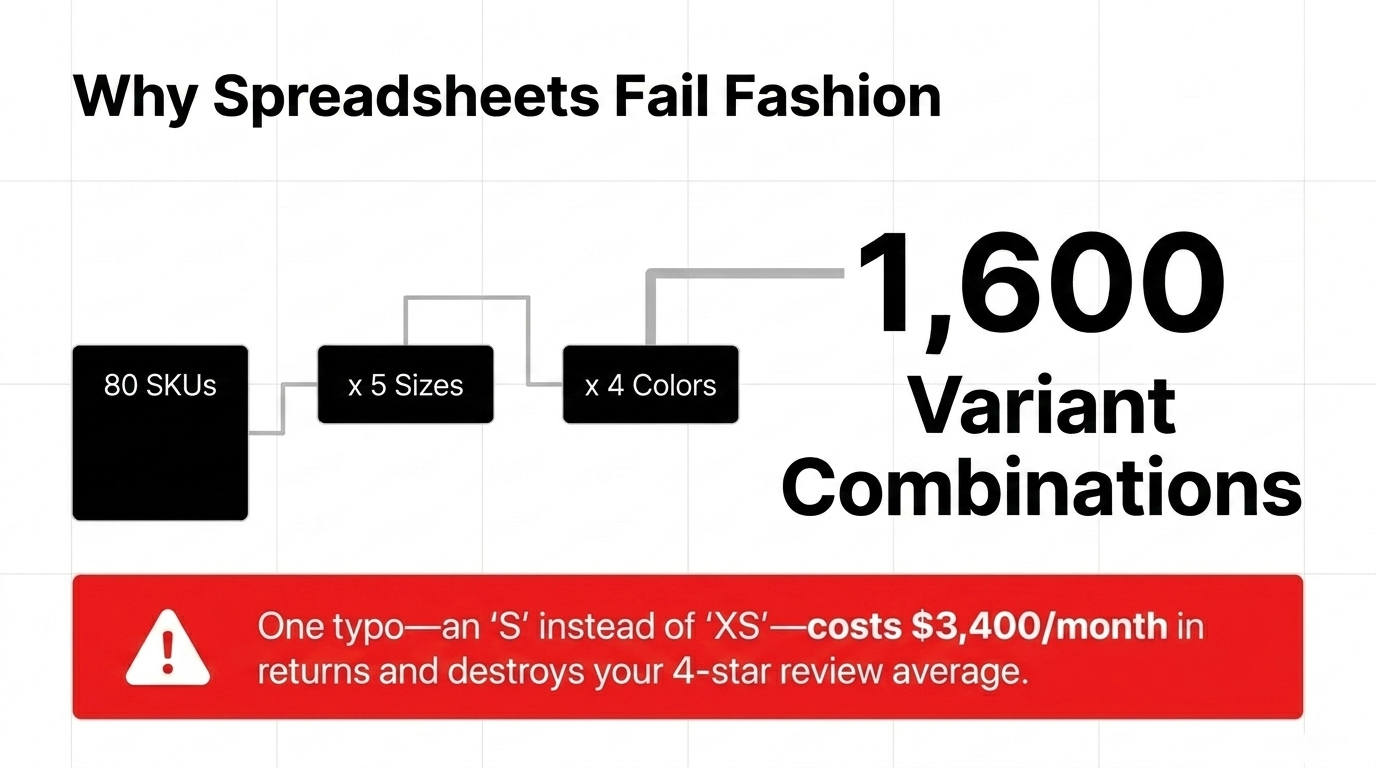
Here is the ugly truth about inventory management in fashion: size and color variants kill spreadsheets. A modest catalog of 81 SKUs with 5 sizes and 4 colors each gives you 1,620 variant combinations to track. One typo in a Google Sheet — a "S" where you needed an "XS" — and you are shipping wrong sizes, eating $3,400/month in returns, and destroying your 4-star review average.
We constantly see D2C founders in their first year using Stocky (the free Shopify inventory app) and thinking it is enough. It is not. Stocky cannot handle multi-warehouse logic, bundle SKUs (like gifting sets), or pre-order demand forecasting. When you run your first influencer drop and 341 orders flood in over 6 hours, Stocky will not tell you that you just oversold your Large hoodies by 87 units.
| Revenue Stage | Recommended Tool | Monthly Cost (approx.) |
|---|---|---|
| Pre-revenue to $250K ARR | Shopify's native inventory + Stocky | $0 |
| $250K to $1.2M ARR | Linnworks or Skubana | $449 to $999/month |
| $1.2M to $5M+ ARR | Odoo ERP (Inventory Module) | $600 to $1,800/month |
| $5M+ ARR | Odoo ERP + AI Demand Forecasting | Custom |
Modern D2C fashion operations require real-time visibility across inventory, orders, and warehouse locations
At Braincuber, we implement Odoo ERP for fashion brands scaling past $1M ARR because it does what no Shopify app can — it connects your purchase orders, warehouse bins, return management, and accounting under a single live dataset. No more reconciling three different dashboards the morning after a sale.
The Payment Stack: Where $11,200 Disappears Quietly Every Year
Payment infrastructure is not exciting. Which is exactly why most fashion founders do not audit it until they are hemorrhaging cash.
The three mistakes we see costing brands $8,000 to $22,000 a year:
Mistake 1: Using a single gateway globally
Stripe is excellent in the US and UK. But in the UAE, Saudi Arabia, and Southeast Asia, local payment methods (Tabby, Tamara, GrabPay) drive 31–44% of conversions. A brand selling $600K/year to Middle Eastern customers without Tabby (buy-now-pay-later) is leaving an estimated $186,000 in revenue on the table.
Mistake 2: Ignoring COD for South Asia and MENA
This is not a 2010 thing. COD still accounts for 47% of e-commerce orders in India and 39% in Egypt. If your tech stack does not support COD with auto-cancellation logic (for non-delivery), your return rate will break 26%.
Mistake 3: Ignoring chargeback automation
Chargebacks in fashion average 1.1–1.8% of gross revenue. At $1M ARR, that is $11,000 to $18,000 disappearing per year. Install Chargebacks911 or Midigator before your first marketing campaign, not after your first dispute batch.
Your payment and checkout stack directly impacts conversion rates and customer trust
Marketing Tech: The Stack That Feeds Your Store Real Data
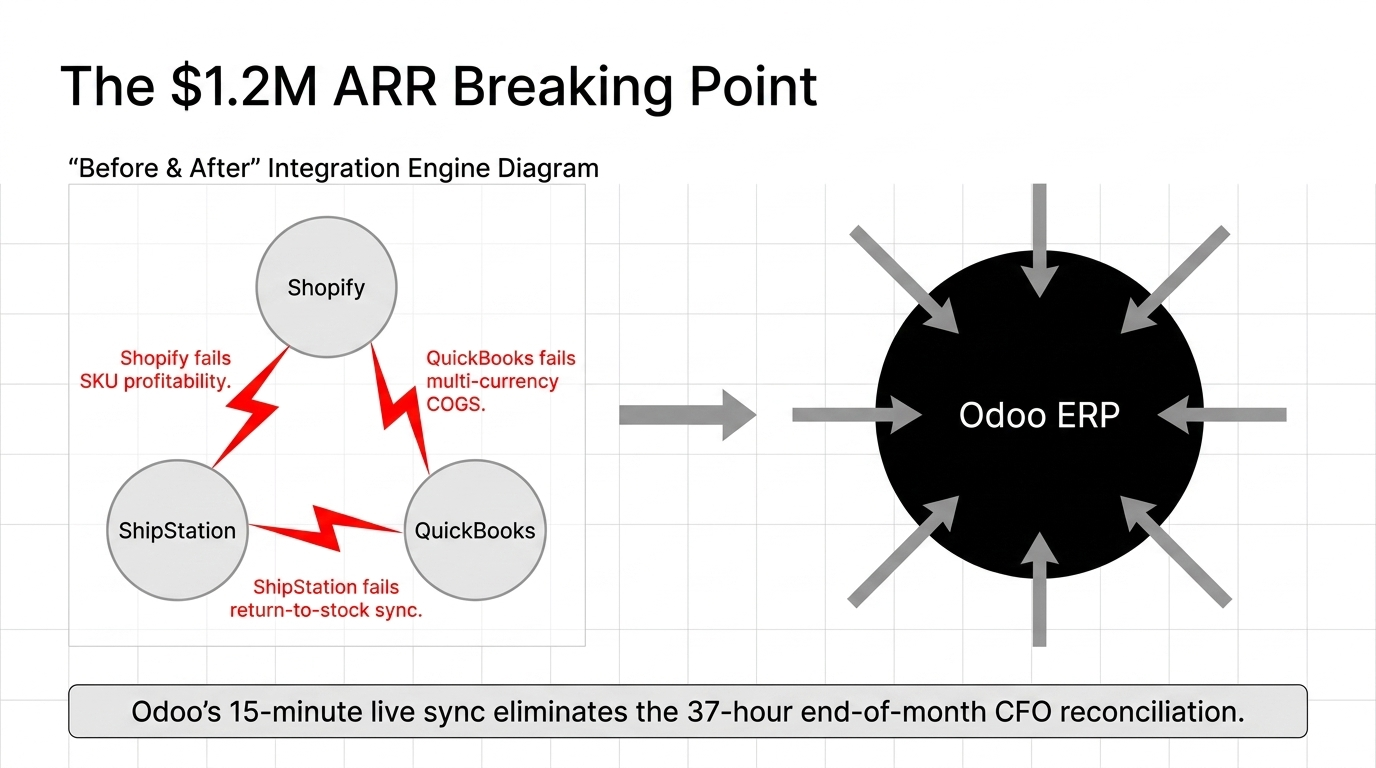
Most D2C fashion brands launch with Klaviyo for email and call it a day. That is not wrong — but it is dangerously incomplete. Here is the full marketing technology layer you need:
Email & SMS — Klaviyo
Your abandoned cart flows should trigger within 30 minutes of cart abandonment. If not, you are losing 15.3% of recoverable revenue.
Attribution — Triple Whale or Northbeam
Post-iOS 14.5, Meta Pixel alone misattributes 28–36% of purchases. At $50K/month ad spend, that is $8,000 to $14,000 in wasted budget monthly.
Reviews & UGC — Judge.me or Okendo
Fashion is visual and social-proof-dependent. Stores with 50+ reviews convert at 2.1x the rate of stores with zero.
Loyalty — Smile.io or LoyaltyLion
Acquiring a new customer costs $34 to $67 via paid social. Re-engaging an existing one costs $3.20.
The Operations Layer: ERP, Shipping, and Returns That Don't Drain Your Team
Here is where we see the most financial damage happen — not at launch, but at Month 4 through Month 12, when order volume climbs and the operations team starts drowning.
Shipping & Fulfillment
Multi-carrier rate shopping: Use ShipStation or Easyship. A fashion brand shipping 400 orders/month in the US can save $2.10 to $4.70 per shipment by auto-selecting the cheapest carrier per zone. That is $840 to $1,880/month in direct savings.
Cross-border (US to UK to UAE): Use Passport Shipping or Easyship's DDP mode. Hidden customs charges are the #1 reason international customers dispute payments. At $1M in international revenue, a 1.4% dispute rate costs $14,000 in chargebacks alone.
Returns Management
Install Loop Returns (for Shopify brands) before Day 1. Manual returns processing via email costs your team 14 minutes per return. At 200 returns/month, that is 46.7 hours of labor — $1,120/month at $24/hour — that Loop automates for $59 to $99/month.
ERP Integration: The Real Game-Changer
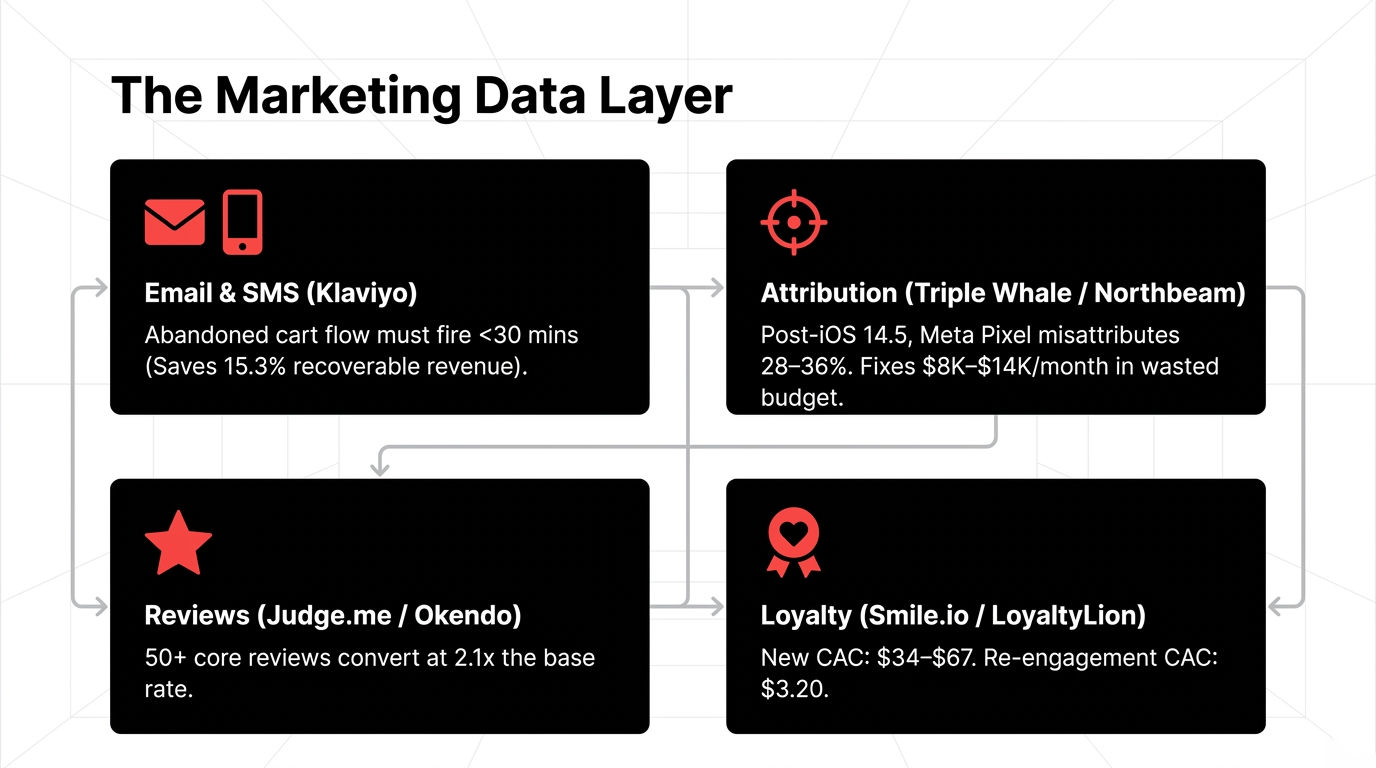
When you hit $1.2M ARR, your Shopify + ShipStation + QuickBooks triangle will start to crack. QuickBooks cannot handle multi-currency fashion COGS properly. ShipStation does not sync return-to-stock inventory automatically. And Shopify's reporting cannot show you profitability by SKU.
This is exactly where Odoo ERP steps in. We implement Odoo's Inventory, Accounting, and Purchase modules together, and the Shopify-Odoo integration sync runs every 15 minutes — so your warehouse team and finance team are always working off the same live number. No more end-of-month reconciliation marathons that take 37 hours of your CFO's time.
Integrated ERP systems connect your warehouse, finance, and shipping in real time
The Tech Stack You Need to Not Touch Until Year 2
Founders constantly want to add tools. Resist. Do not add a custom mobile app (cost: $35,000 to $80,000; average ROI timeline: 26 months — negative before $3M ARR). Do not add a headless Shopify build (unless you have 3+ engineers and do $8M+ ARR — otherwise you are building a race car for a 30 mph road). And skip subscription commerce for fashion (it works for socks and basics, not trend-driven apparel).
The goal in Year 1 is to build a tech stack that runs with 2 people, not one that requires a 6-person operations team to maintain.
The Pre-Launch Tech Checklist (Print This Out)
Before you go live, confirm every item below:
Storefront
☐ Shopify store with paid fashion theme live
☐ AI-powered search installed and tested
☐ Mobile PageSpeed score above 65
☐ One-page checkout enabled
Inventory
☐ Variant-level inventory tracking configured
☐ Low-stock alerts set at 7-unit threshold per SKU
☐ Pre-order rules defined (if applicable)
Payments
☐ Stripe (US/UK/EU), Tabby or Tamara (MENA) active
☐ COD enabled for South Asia/MENA markets (if targeting those regions)
☐ Chargeback protection tool installed
Marketing Tech
☐ Klaviyo: Welcome, Abandoned Cart, Post-Purchase flows live
☐ Triple Whale or Northbeam attribution installed
☐ Judge.me or Okendo review app installed and auto-trigger configured
☐ Smile.io loyalty program live
Operations
☐ ShipStation or Easyship connected with rate shopping enabled
☐ Loop Returns portal live and linked from website footer
☐ Odoo ERP scoped and implementation timeline confirmed (for $1M+ ARR targets)
Analytics
☐ Google Analytics 4 installed and e-commerce events firing
☐ Meta Pixel + Conversions API (server-side) active
☐ Hotjar or Microsoft Clarity heatmapping installed on PDP and checkout
The Real Cost of Launching Without This Checklist
We audited a fashion brand in Singapore in 2024 that launched without proper attribution, used Stocky for inventory, and had no returns automation. At $900K ARR, they were:
▶ Wasting $9,300/month on misattributed ad spend
▶ Losing $4,100/month in manual returns labor
▶ Carrying $31,000 in ghost inventory (items listed as "in stock" that were already sold out)
Total preventable loss: $13,400/month. That is $160,800 over 12 months.
The cost of fixing it with proper tech implementation? $22,200 one-time.
That is a 624% ROI in year one.
That is the ROI conversation no one has with you before launch. We are having it now.
Frequently Asked Questions
Do I need Odoo ERP from Day 1 of my D2C fashion launch?
No. Odoo ERP is the right call at $1.2M to $1.5M ARR, not at launch. Pre-revenue to $500K, Shopify's native tools plus Klaviyo and ShipStation handle 94% of operational needs. Starting with Odoo too early adds $15,100 to $25,300 in setup costs before your revenue can justify it.
What is the minimum tech budget to launch a D2C fashion brand properly?
Plan for $1,800 to $3,200/month in SaaS tools for a correctly built stack: Shopify ($79 to $299), Klaviyo ($45 to $150), Triple Whale ($129), Judge.me ($15), Smile.io ($49), ShipStation ($99), and Loop Returns ($59). One-time setup (theme + apps + integration) runs $2,400 to $5,500.
Can I use WooCommerce instead of Shopify to save money?
Technically yes. Practically no. WooCommerce's hidden costs — hosting ($80 to $200/month), plugin licenses ($600 to $1,400/year), and developer maintenance ($300 to $900/month) — cost 23 to 41% more than Shopify at the $250K to $1M ARR stage. And Shopify's checkout converts at 1.3 to 1.7x better for fashion, purely from load speed and UX optimization.
How long does a proper Shopify + Odoo integration take to implement?
A clean Shopify–Odoo integration with inventory, order sync, and accounting takes 6 to 9 weeks with a certified Odoo partner. Braincuber's standard D2C fashion implementation runs 7 weeks and includes 3 months of post-launch support. Brands that try to DIY this via a $49 Shopify app spend an average of 19 weeks and still require professional help.
What happens to my data if I migrate from Stocky/ShipStation to Odoo ERP mid-growth?
A structured Odoo migration preserves 100% of your historical order data, SKU structures, and customer records. We migrate inventory valuation, open POs, and supplier price lists as part of a standard cutover. The risk is not in the data — it is in unmapped product variants. That is why we run a 3-week parallel-run period before switching Shopify live sync to Odoo.
Stop Building Blind.
Book our free 15-Minute D2C Tech Audit — we will identify your single biggest operational leak before you go live.
☐ Storefront speed and UX review
☐ Inventory and operations audit
☐ Payment and marketing tech stack assessment
☐ ROI roadmap with prioritized next steps
No sales pitch. Just actionable data.
Book Your Free 15-Minute Audit*Category: Deep Dives Per Industry | Published by Braincuber Technologies | Applicable globally across US, UK, UAE, Singapore, India, and Southeast Asia