
Key Takeaways
Why H2 2026 Is a Line in the Sand
H2 2026 is not about adding more tools to an already bloated tech stack; it is about building a ruthless, outcome-focused product roadmap that actually ships and actually gets used. For US teams running learning LMS platforms, mobile app LMS rollouts, and IT knowledge base products, this half-year will decide who turns their backlog into revenue and who keeps rewriting slide decks no one reads.
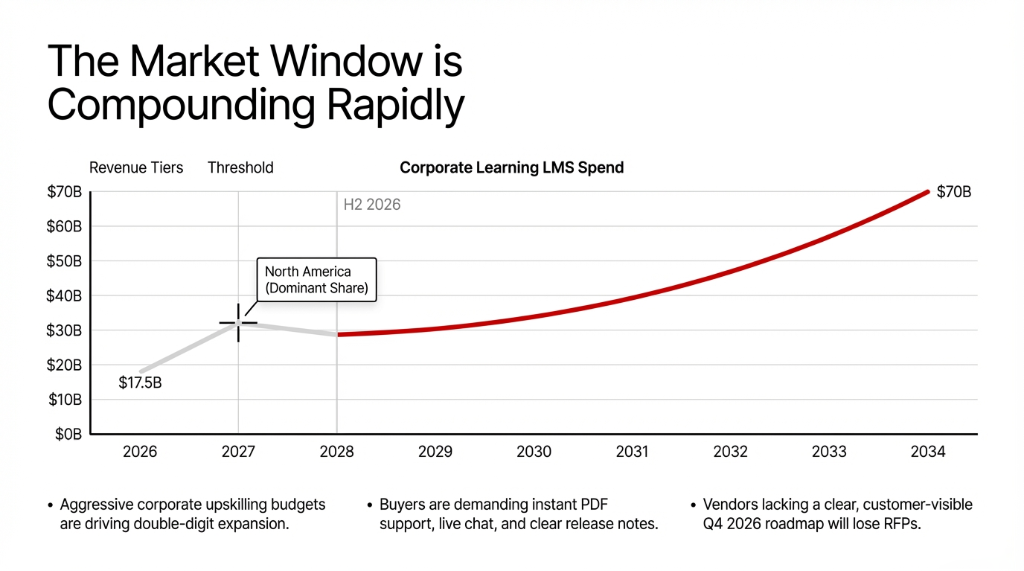
LMS platforms and knowledge base apps are in the middle of a steep growth curve in the US, backed by double-digit market expansion and aggressive corporate upskilling budgets. That growth also means buyers are getting pickier; they expect live chat, instant PDF support, a clear feature roadmap, and release notes that make sense, not vague promises buried in a 6 MB attachment.
The Four Big Bets for H2 2026
1. LMS and Knowledge Base Are Colliding
The old "LMS means SCORM courses" view is dead in the US enterprise. LMS now means a blended learning and IT knowledge base layer that touches every team, every device, and every support ticket.
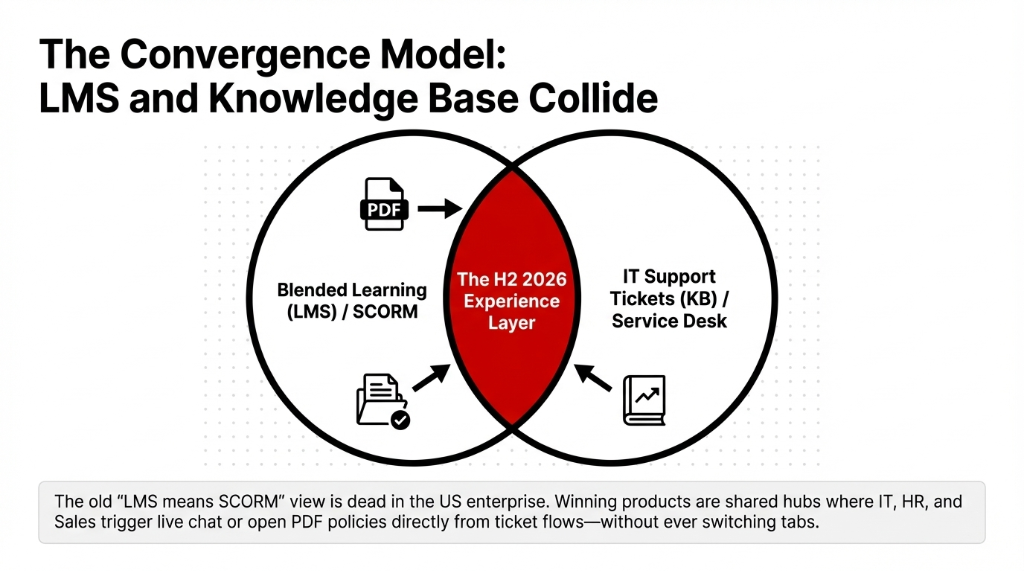
That is why the best LMS products are quietly turning into shared knowledge base hubs: one place to read PDF guides, one click to open PDF assets inside LMS content flows, one unified LMS knowledge base where service desk IT teams, HR, and sales all pull from the same articles.
What "LMS + Knowledge Base" Looks Like in H2 2026
Attached Support Assets
Open reports and support PDF assets attached directly to lessons. No more hunting through 80 pages of a random manual.
In-Context Live Chat
Trigger helpdesk live chat or LMS support chat while reading a policy page. Support agents do not need to switch tabs.
Article-on-Ticket Views
Open article views that sit on top of tickets, so support LMS agents answer questions without leaving the ticket screen.
If your roadmap still treats "knowledge base" as a separate product, you are already behind.
2. Mobile-First Everything (Not Optional Anymore)
The mobile LMS app is no longer a side project. LMS mobile usage in the US is scaling with the broader LMS market as hybrid and frontline workforces demand training while commuting, on the shop floor, or on client sites.
Offline-Capable Mobile App
Responsive mobile app LMS with offline support for opening PDF guides, screenshots, and key SOPs. No Wi-Fi required on the shop floor.
Mobile Application Roadmap
Biometric login, push reminders for overdue modules, and one-tap access to open notes and support flows. Not a stripped-down browser wrapper.
Deep Service Desk Integration
Integration with service desk IT and meeting workflows, so employees can launch live chat or support flows without leaving the mobile app.
If your LMS apps still treat the browser as the default and the mobile app roadmap as "coming soon", expect to lose to competitors who already moved.
3. Agile Roadmaps, Not Annual Slide Decks
Static plans died with office-only work. Agile roadmap planning has become the default for product teams trying to balance long-term strategy with short-term delivery.
| Layer | Scope | Review Cadence |
|---|---|---|
| Epic Roadmap + Content Roadmap | 6–18 months | Quarterly with leadership |
| Feature Roadmap + Release Roadmap | Quarterly slices with clear owners | Monthly with cross-functional teams |
| Goals Roadmap (Week-by-Week) | Linked directly to tickets + capacity | Weekly standup |
Leading guides from Atlassian, Productboard, and other practitioners reinforce the same pattern: keep the roadmap visual, focus on outcomes, and review it regularly with all stakeholders. Your H2 2026 roadmap cannot just be a bullet list of ideas. It has to be a visual roadmap that people actually open, read, and trust.
4. Customer-Visible Roadmaps as a Sales Weapon
US buyers now expect to see an open roadmap before they sign multi-year deals. They want public release notes that tie back to earlier promises. A product roadmap page where they can see what shipped, what is in discovery, and what is paused. Open LMS pricing pages connected to roadmap support statements, so they can tell which tier gets which features.
The Vendors Who Win in H2 2026
Will treat their roadmap as a living sales asset, not a private artifact. Prospects will see the roadmap updates, click through to open article explanations, and even download a roadmap PDF for their internal approvals.
If the only way prospects understand your plan is by booking a call, you are hiding behind demos.
Building Your H2 2026 Roadmap Story
Start with Ruthlessly Clear Goals
Roadmap goals come first. Not features. For H2 2026, that means writing goals like:
Goals That Actually Move Your Product
Adoption Goal
"Increase monthly active users on mobile LMS app by 37% in US mid-market accounts."
Support Goal
"Cut average time-to-answer from our knowledge base app by 40 seconds for service desk IT agents."
Revenue Goal
"Grow LMS product revenue in the US by 18.5% while keeping support ticket volume flat."
This is where goals roadmap work begins: not with sticky notes, but with a brutal conversation about which metrics actually move your product. Only after that do you map which features belong on the IT product roadmap, which items go into the LMS roadmap versus pure knowledge improvements, and where you need roadmap solutions from partners rather than building everything in-house.
Map the Experience Backwards from the User
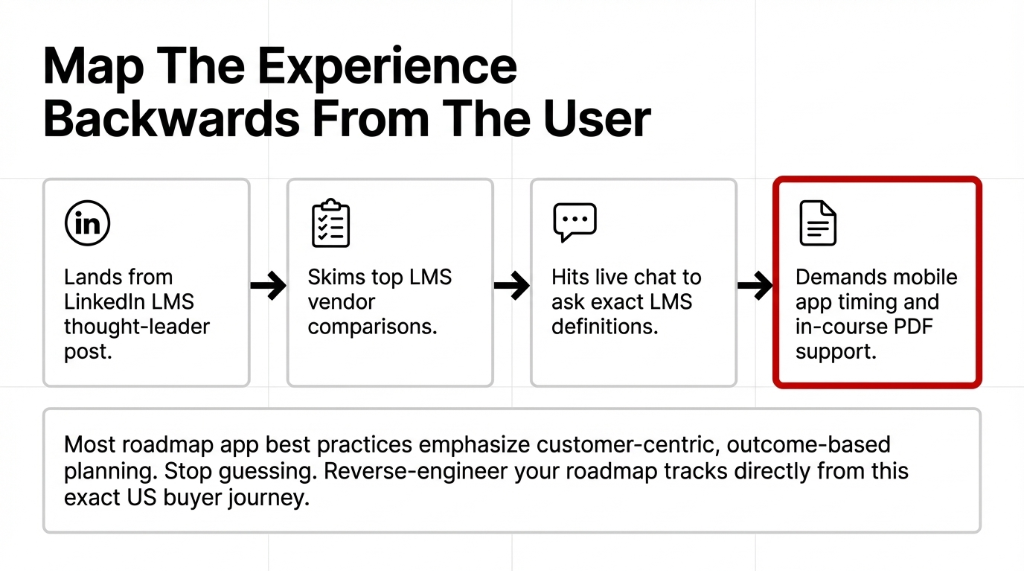
Look at your product the way a US buyer actually touches it: they land on your product roadmap page from LinkedIn LMS thought-leader posts, skim your top LMS comparisons, hit a live chat bubble to ask if your LMS means what they think it means, then ask about mobile app roadmap timing and whether you support PDF help inside courses.
Now reverse-engineer your roadmap building plan from that journey. This is not theory; most roadmap app best practices now emphasize customer-centric roadmapping and outcome-based planning grounded in real user flows.
Translate Goals into Concrete Tracks
| Track | What Goes Here |
|---|---|
| Acquisition | Mobile app roadmap, LinkedIn LMS campaigns, better PDF previews on marketing pages, roadmap download options for procurement teams |
| Activation | Simplified LMS app onboarding, must-do action highlights, knowledge base tours showing where notes and guides live |
| Retention | LMS knowledge base upgrades, support workflows, better PDF handling for compliance training |
| Expansion | New LMS content bundles for US industries, analytics upgrades, open share workflows for product champions |
Each track gets an epic roadmap view (6–12 months), then is sliced into H2 2026 deliverables and sprint-level details.
Non-Negotiable Capabilities for H2 2026
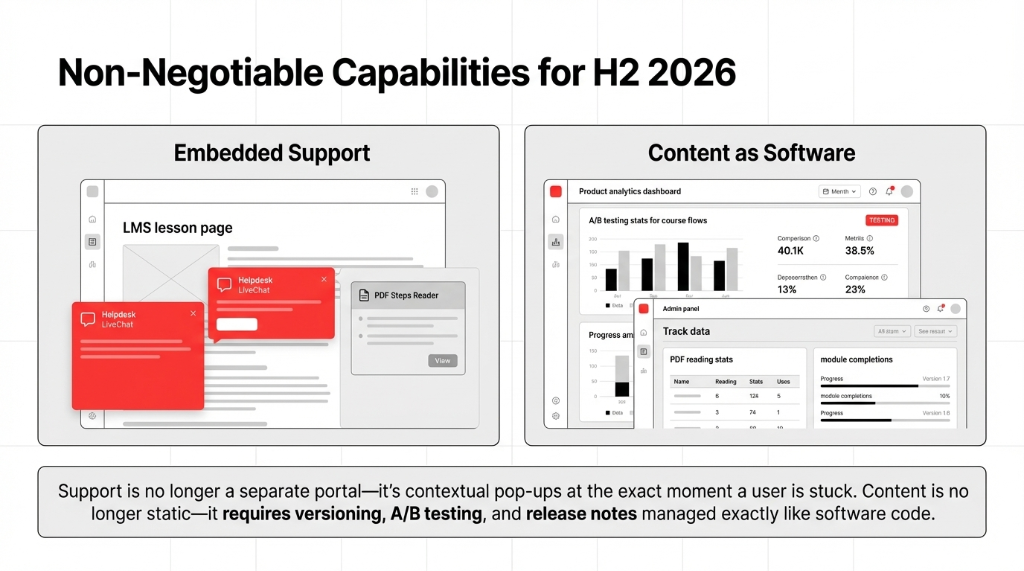
1. Embedded Support That Actually Helps
Support is no longer a separate portal. Users expect help at the exact moment they get stuck. Your H2 2026 roadmap should include helpdesk live chat widgets wired straight into your knowledge LMS, in-app PDF help that lets users open guides without leaving the screen, and contextual knowledge base pop-ups based on the field or module the user is viewing.
If users have to download a random manual and then hunt through 80 pages, you do not have support — you have noise.
2. Content That Behaves Like Software
LMS content is no longer static. In H2 2026, content roadmap work needs the same discipline as feature work. That means treating LMS content as versioned assets with release notes, running A/B tests on course flows the same way you test UI, and giving admins a dashboard to see PDF stats and understand which modules drive completion.
When you ship new content, your release roadmap should talk about it next to code changes. The strongest adoption lifts come from treating "content" and "features" as a single roadmap item.
3. Trustworthy, Public-Facing Roadmaps
By late 2026, hiding your roadmap is going to look defensive. Buyers want an open roadmap page where they can filter by product, clear tags showing what is planned, in progress, and shipped, and roadmap support notes that link straight to open article FAQs and knowledge base articles.
Use an epic roadmap view for executives and a more detailed agile roadmap for internal teams, but make sure some version is shareable.
How to Pressure-Test Your H2 2026 Roadmap
Before you call the roadmap final, run it through three brutal filters.
1
Can Support Use It Tomorrow?
Sit your support lead down with the roadmap. Can they point to where PDF support improvements land? Do they know when knowledge base upgrades go live? If a client asks "LMS means what for us in 2026?" can they walk through the roadmap without guessing? If not, your roadmap is marketing, not a working plan.
2
Can Sales Sell It Without a Meeting?
Your public, open roadmap should let a prospect self-serve answers while they compare your LMS against top vendors. They should be able to download a one-pager, open support FAQs, and see that roadmap building is connected to release notes and future items.
3
Can Users Feel It Inside the Product?
By Q4 2026, users should be able to tap a small "our roadmap" link in your LMS mobile UI. See what shipped last month and what is coming next. Open and share updates with their team — not forward yet another slide deck.
The Real Play for H2 2026
H2 2026 is not about chasing every buzzword. It is about saying no to half your backlog, saying yes to the work that moves real metrics, and making your roadmap so clear that support, sales, and customers can all read it and say, "Yes, this makes sense."
Teams that nail this in the US market, especially in LMS and IT knowledge base categories, will ride a market that is already compounding at high double-digit rates. Teams that keep treating the roadmap as an internal document will keep publishing plans that nobody opens.
The choice is simple. H2 2026 is coming either way. Check your current roadmap. If it lives in a slide deck nobody opened last month, you already know who to call.
FAQs
How should we structure our H2 2026 product roadmap?
Use a layered approach: one epic roadmap for 6–18 months, a detailed feature roadmap for H2 2026, and an agile roadmap sliced into sprints. Keep it visual, tie every item to clear goals, and review it with stakeholders monthly.
What makes a good LMS roadmap for US enterprises?
A strong LMS roadmap aligns mobile app LMS, LMS content, and LMS knowledge base upgrades to measurable outcomes. It should show how features improve adoption, reduce support load, and support corporate upskilling trends driving LMS market growth in North America.
Why is an agile roadmap important in 2026?
An agile roadmap lets teams adjust to changing customer needs, market shifts, and feedback without losing strategic direction. It improves transparency, collaboration, and risk management while keeping the focus on value and faster time-to-market.
How public should our roadmap be?
Make at least a trimmed, customer-facing version public. Include high-level themes, release windows, and links to release notes and knowledge base articles. Buyers now expect an open roadmap before committing to multi-year contracts.
Where do LMS and knowledge base tools converge on the roadmap?
They converge around learning, support, and shared content. Modern LMS platforms double as knowledge base and app knowledge base hubs, mixing courses with searchable articles, PDF help, and embedded live chat. Treat them as a single experience layer in your H2 2026 roadmap.
Your Roadmap Is Either a Sales Weapon or a Slide Deck Nobody Opens
The LMS market compounds from $17.5 billion to $70 billion by 2034. If your H2 2026 roadmap still lives in PowerPoint, you are not in the race. Braincuber builds product roadmap infrastructure for US teams serious about turning their backlog into revenue.