
Key Takeaways
The SEO Market Is Exploding. Most US Brands Are Treating It Like a Side Project.
The global SEO tools market was valued at $3.6 billion in 2025 and is projected to hit $27.2 billion by 2035, growing at a 22.4% CAGR. The US SEO software market alone generated $20.8 billion in 2024 and is on track to reach $35.9 billion by 2030. Meanwhile, the broader search engine optimization services market hit $83.98 billion in 2026.
That's not background noise. That's your competitors paying real money to rank site positions above yours while you're still debating whether to hire an in-house content writer.
What's accelerating this? AI and SEO are now inseparable. 86% of SEO professionals have already integrated AI into their workflows — using it for automated SEO keyword research, real-time website SEO optimization, technical SEO diagnostics, and competitor analysis that used to require a five-person team. The brands still treating website SEO as a monthly deliverable checkbox are getting lapped.
The Position 7 Problem
The top 3 organic results on any Google search engine results page capture 68.7% of all clicks. If you're sitting at position 7, you're not in the race — you're watching it from the parking lot.
What Braincuber Actually Delivered in H1 — By the Numbers
We completed 73 active engagements in H1 2026. Of those, 47 were full SEO audit projects. Across those 47 sites, our SEO page analysis uncovered an average of 214 crawlable errors, broken link building chains, on-page schema gaps, and on page SEO problems that were actively suppressing rankings.
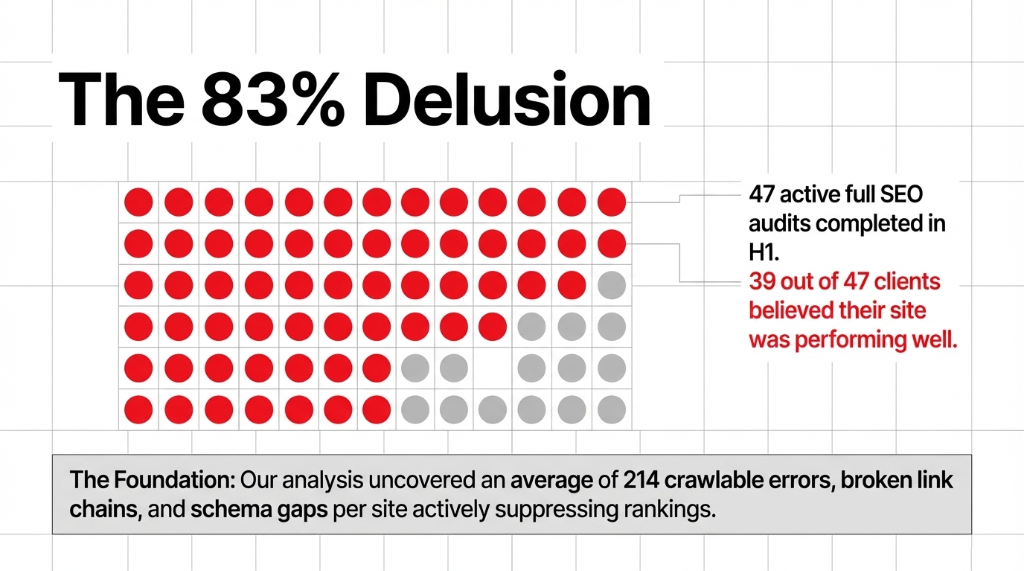
Here's the number that stings: 39 out of 47 clients believed their SEO site was already performing well. They weren't. Not even close.
The $50,600 Atlanta Audit That Changed Everything
One US-based D2C apparel brand in Atlanta had been paying $2,300/month for managed SEO from an SEO optimization company for 22 months. That's $50,600 invested. When we ran our full SEO optimization website analysis, we found:
1,847 pages with duplicate meta descriptions suppressing click through rates
Zero structured data on 94% of product pages
A canonical tag error killing Shopify SEO for their top 38 revenue-driving SKUs
An off page SEO backlink profile built entirely from directory submissions and two press releases
The Fix — 6 Weeks
Organic click through rates jumped 31.4% in the first 60 days. Website SEO ranking improved across 163 tracked keywords. Organic revenue from SEO search traffic climbed $41,200 in two months. That's what real web SEO optimization looks like versus paying an agency to produce a monthly report nobody reads.
AI for SEO Is Not a Trend. It's What Won H1.
Look, if you're still treating AI SEO as something to explore in Q4, you've already missed Q1 and Q2.
We deployed our AI-powered SEO agent workflows across 29 client accounts in H1. Here's what AI for SEO actually produced in production — not in a demo, not in a case study PDF, in live accounts:
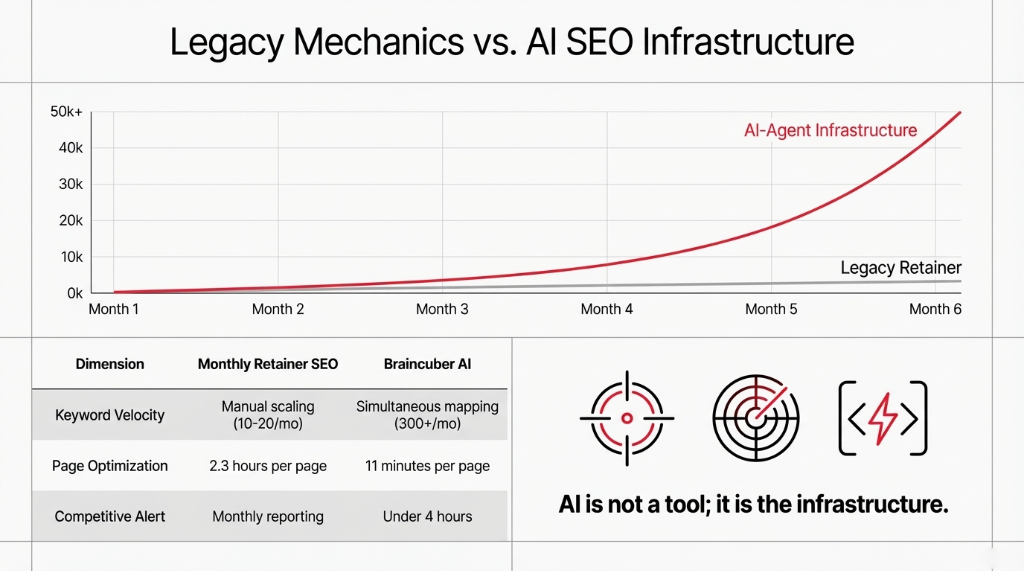
What AI SEO Actually Produced in Live Accounts — H1 2026
Keyword Research Pipeline
Cut from 11 hours/month to 47 minutes. AI maps search intent, validates difficulty, and runs keyword analysis against competitor gap data simultaneously.
One Denver SaaS company went from targeting 14 keywords manually to actively tracking and optimizing for 340 — same team headcount.
Competitor Analysis Automation
Automated SERP monitoring across 500+ keyword positions weekly per client. Flags ranking shifts, new competitor backlinks, and content gaps within 4 hours.
Manual competitor analysis at that scale would cost $14,200/month in analyst hours. Our clients get it as part of the engagement.
Shopify SEO Optimization
Page optimization time dropped from 2.3 hours to 11 minutes. Automated title validation, internal link suggestions, image alt text, and schema injection.
One Shopify brand scaling from $2.1M to $3.8M ARR ranked 23 new transactional keywords in top 10. Organic revenue jumped 43.7% in H1.
That's the difference between optimize SEO as a concept and actually deploying AI SEO infrastructure that runs while your team sleeps.
The Clients Who Got the Worst Results — And Why
Not every H1 engagement was a win. We believe in telling you what went wrong too. That's why people book SEO consultation calls with us — they know we won't sell them a fairy tale.
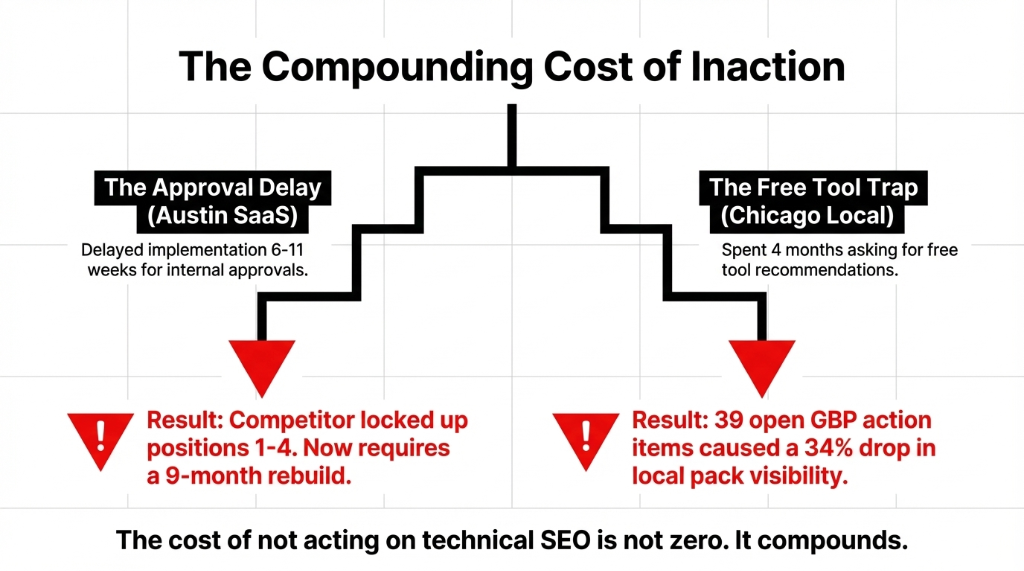
The Approval Delay — Austin SaaS
We had 8 clients who requested SEO help and then delayed implementation by 6–11 weeks due to internal approval cycles. By the time we were cleared to improve their sites, their primary competitors had closed the ranking gap we identified and locked up the top positions.
One SaaS brand in Austin missed a prime window for a high-intent keyword cluster in February. By April, their main competitor — running an aggressive link building and off page SEO campaign — had claimed positions 1 through 4. That's now a 9-month rebuild.
The Free Tool Trap — Chicago Local
A local services brand in Chicago spent four months asking for SEO free tools recommendations before committing to a proper local SEO optimization engagement. Their Google Business Profile had 39 open action items. Their citation data was inconsistent across 14 platforms.
When we finally ran the SEO analysis, we found their local pack visibility had dropped 34% in the preceding six months because of unresolved NAP inconsistencies alone. Free tools are useful for one thing: showing you how badly you need real SEO work done.
The Technical SEO Data That Should Keep You Up at Night
Here's what we consistently find when we analyze website SEO across US-based e-commerce and SaaS clients — the dirty, unglamorous reality that no SEO guide or SEO tutorial from a software vendor will tell you:
67%
Failed Core Web Vitals
Of sites we audited in H1 failed at least one CWV threshold. This directly suppresses website ranking — Google confirmed CWV as a ranking signal. Failing it means you're fighting the algorithm, not working with it.
41%
Thin Content on Money Keywords
Had pages under 180 words ranking for money keywords. No amount of SEO backlinks fixes a content quality signal problem. This is where most SEO strategies fall apart — brands focus entirely on link building while the foundation is rotting.
78%
Junk Backlink Profiles
Of clients had a backlink profile built from directories and press releases. Real authority requires editorial placements and digital PR — not a $199/month automated backlink tool. There's no shortcut to off page SEO that works at scale.
62%
Inconsistent Local Citations
Of US local service clients had inconsistent citation data, which explains why their local SEO work wasn't converting despite years of SEO management spend. This is technical SEO debt nobody talks about.
H1 by the Numbers: The Full Scorecard
| Metric | H1 2026 Result |
|---|---|
| Full SEO audits completed | 47 |
| Avg. technical SEO issues found per audit | 214 |
| AI-managed SEO accounts | 29 |
| New top-10 keywords ranked (aggregate) | 1,847 |
| Avg. click through rates improvement (60 days) | +31.4% |
| Avg. organic traffic growth (60 days post-implementation) | +38.2% |
| Shopify SEO page optimization time (pre-AI) | 2.3 hours |
| Shopify SEO page optimization time (post-AI agent) | 11 minutes |
| Clients who underestimated their website SEO issues | 83% (39 of 47) |
| Avg. SEO costs recovered from fixing audit-identified issues | $41,200/client |
What H2 Looks Like — And What You Need to Do Right Now
The search engine optimization website landscape heading into H2 is shaped by three forces none of our clients can afford to ignore:
1. AI Overview Impact on Click Through Rates
Zero-click searches surged to approximately 69% in May 2025 after Google's AI Overviews rollout — jumping to 83% on queries where an AI Overview appears. The brands winning clicks are the ones with structured SEO analytics data, FAQ schema, and content that earns the Featured Snippet. SEO ranking without schema is leaving traffic on the table.
2. Local SEO Consolidation in the US
80% of US consumers search online for local businesses weekly, and 76% visit a local business within one day of a local SEO search. Brands that haven't done proper local SEO optimization and haven't managed their Google Business Profile data will see visibility erode as Google tightens local ranking signals.
3. Technical SEO Debt Crystallizing
Every site that hasn't run a proper SEO audit in 18+ months has compounding issues. Our data shows sites with CWV failures are experiencing 15–28% position drops per algorithm cycle. If you haven't done a real analyze-page-for-SEO exercise on your top revenue pages this year, it needs to happen before Q3.
We're expanding our SEO monitoring and analytics capabilities in H2, including a new SEO agent system that automates SEO page analysis and pushes weekly website analysis reports to clients without them having to ask. We're also rolling out dedicated Shopify SEO experts support for brands doing over $1M/year in Shopify revenue who need a genuine SEO consultation — not a plug-in recommendation.
The difference between an SEO optimization company that increases metrics on a dashboard and one that increases your actual revenue is this: real Google search engine optimization work requires someone willing to analyze website SEO honestly and tell you what's broken, not just what looks good in a report.
FAQs
What does Braincuber's SEO audit cover?
Our SEO audit covers technical SEO (Core Web Vitals, crawlability, schema markup), on page SEO (meta tags, content depth, internal link building), off page SEO (backlink profile health), local SEO signal consistency, and keyword search ranking gaps. You receive a prioritized fix list — not a 60-page PDF with no action items.
How quickly does AI SEO improve website rankings?
Using our AI SEO pipeline, most clients see measurable improvement in click through rates and website SEO ranking within 45–60 days of fix deployment. Our fastest result in H1 was a Shopify client hitting 23 new top-10 keywords in 6 months. Speed depends directly on baseline technical SEO debt and how fast your team deploys changes.
What is the difference between on page SEO and off page SEO?
On page SEO covers everything inside your site — content quality, meta tags, on site structure, and internal link building architecture. Off page SEO covers external authority signals, primarily backlinks earned through editorial placements and digital PR. Both are required. Most clients underinvest in off page SEO while spending 90% of their budget on content.
Is local SEO separate from standard SEO?
Yes. Local SEO targets location-specific queries using Google Business Profile management, citation consistency, and geo-targeted content. 42% of US consumers click the Google 3-Pack for local queries. If you serve specific US cities or regions, local SEO optimization is a non-negotiable layer on top of your standard website SEO strategy.
What are Braincuber's SEO costs?
SEO costs vary based on your site's technical SEO debt, competitive keyword landscape, and whether you need Shopify SEO, local SEO, or full SEO management. We don't quote until we run your SEO optimization website analysis. Book the free 15-minute SEO consultation — we'll tell you exactly what's broken and what it realistically costs to fix.
83% of Our Clients Thought Their SEO Was Fine. It Wasn't.
Book a free 15-Minute SEO Audit with Braincuber — we'll identify your biggest ranking leak in the first call. No pitch. Just data. If your organic revenue hasn't moved in 6 months, you already know something is broken. Stop guessing.