
Key Takeaways
Why I Wrote This
Inside the company, we follow a strict, anti-fluff writing framework so that when we talk to you, we stay blunt, specific, and honest instead of hiding behind vague buzzwords. This letter follows the same rule.
As a founder, I have been on calls at odd hours, answered emails when everyone else was asleep, and fought for features that did not look "scalable" on a slide but mattered to one real customer with a real fire to put out. You do not see every trade-off we make, but you feel the impact when we get it right — and when we do not.
So this is my attempt to pause, look you in the eye, and say: we have heard you, we are still learning, and we are not here by accident.
The Early Days You Never Saw
In the early days, nothing about this felt glamorous. There were weeks when I stared at the bank account and thought, I have no money, little money, practically no margin for a single mistake.
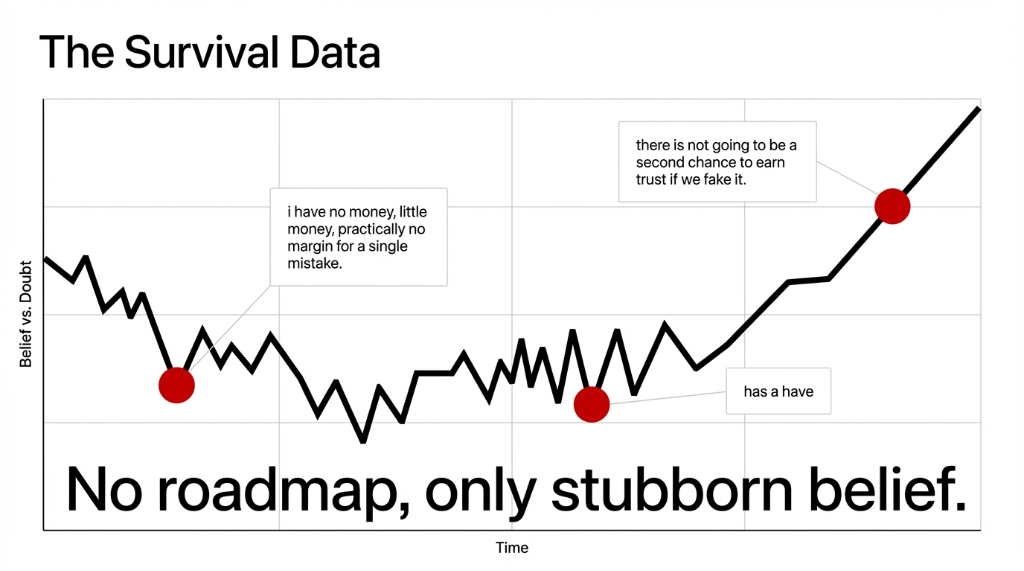
Back then my notebook was a mess. On one page I had scribbled, "You are tired but you still have to wake up and keep building." Then I added, "This will make sense over time if you keep showing up every day, thinking about it all day."
From the Founder's Notebook
Page 1, Year 1
"No one listened at first. I have no money. But I will figure it out. Let us try again."
Margin note, same page
"I have been scared before and still kept moving forward. Make a note: this is the year we finally get it right."
Names page
"They were the proof that your time matters, that we have something real to offer because they have real problems and you have trusted us with them."
Underlined, circled three times
"If you want this to last, honor every promise, remember what you have had to sacrifice, and accept that if you will lead, you must listen more than you talk."
I challenged myself with questions like, "What do you do when people say it will never work, when you hear you were too late, when all you want is more time with the problem so you can actually fix it?"
Some scribbles barely made sense — like "has a have" scribbled between two product sketches, or "I do not know" circled three times next to a pricing idea, or the warning "there is not going to be a second chance to earn trust if we fake it."
"I am not quitting, even if it feels like the only option, even if the checklist says we need more funding, even if we were underestimated and looked over by the big guys."
— Next to a coffee stain, Year 1
I even wrote advice to my future self: "If I was you five years from now, I would tell current me: choose your words carefully, because someone will read this and think, I am exactly there, I need right now just one honest personal note from a founder who is not selling a dream."
Later in the journey I added updates: "I have had wins. On a personal note I am grateful. But I still wake up hungry to find out what we have had to learn next."
Flipping back, I saw lines like "we had no roadmap, only stubborn belief," and later, "to have had even one customer stay would have been a victory, but now we are you and us together in this. I can not pretend it was all strategy; a lot of it was simply not giving up."
Year 3
"We have been wrong before. Our mindset had to change. I told myself I would have quit in another life, but I have not, and I will have more patience for the next chapter because you have been patient with us."
Exhausted night entry
"I have gone down dead ends, but the right way always came back to listening to you, and one day we will have systems that match the care we feel. We feel more responsible, not less, as we grow."
Buried in those pages was a confession: "I had doubts about leadership and just did not say them out loud, but your faith helped give us courage when we had none to spare, and your trust helped give us space to fix what we did wrong."
Those notebooks were not pretty. But they kept me honest about who this was really for.
What You Taught Us
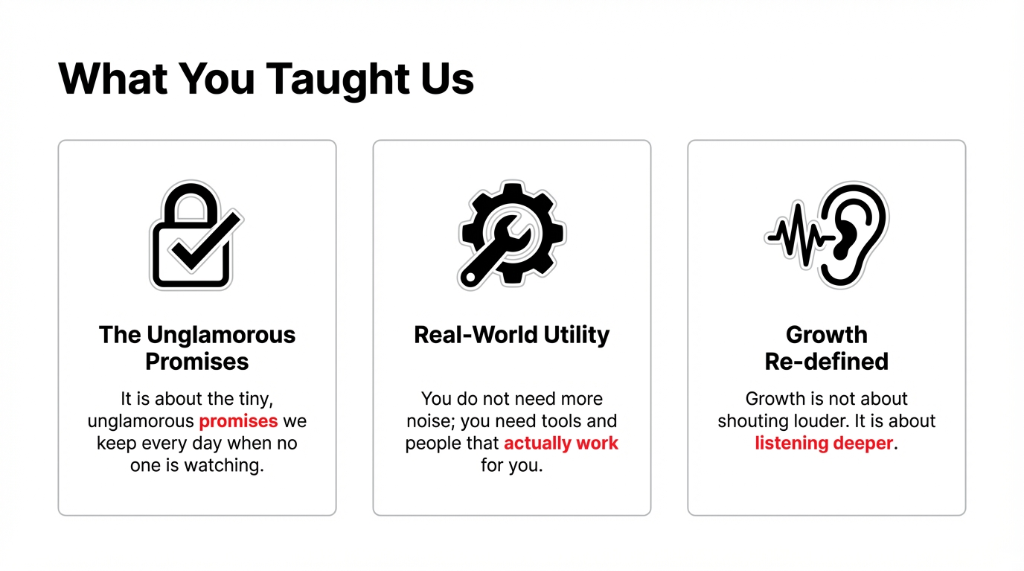
Over time, you have taught us that this company is not about the product alone. It is about the tiny, unglamorous promises we keep every day when no one is watching.
You have given us hard feedback when we missed deadlines. You have had patience when a release slipped by a week. You have been direct when a feature did not behave the way you do your work in the real world. You do not need more noise; you need tools and people that actually work for you.
When we shipped something that looked clever but did not feel helpful, you were honest. When we tried to impress instead of serve, you pulled us back to the real problems that were taking over your calendar.
We have learned that growth is not about shouting louder. It is about listening deeper.
How We See Your Time
Your time is the one thing we can never refund.
Every bug, every confusing screen, every delay has a real cost on your side of the screen. So when you choose to spend your time on a demo, an onboarding call, or a support ticket with us, we see it as a debt we owe you.
We have to earn that back with reliability, with clear communication, and with a product that behaves the way your world works, not the way a slide deck imagines it.
If you want to know what we obsess over now, it is not just features. It is the moments where we either respect your time or waste it. We have had wins and we have had failures on that front, and we are not done improving.
Where We Go Next
Moving forward, there are three promises I want to leave with you.
1. We will stay honest about trade-offs.
There were opportunities that looked big on paper, but there was a cost in focus that we were not willing to pay if it meant neglecting you.
2. We will keep choosing depth over hype.
We have been tempted to chase trends, but the right way for us has always been listening to real customers and iterating with them, not building for headlines.
3. We will keep making space for your voice.
If you want to shape what we build next, we have to keep that feedback loop open. If you want to stay quiet and just use the product, that is fine too — but know that we are listening even when you do not say a word, watching what actually helps you move faster.
We will have missteps. We will have launches that land perfectly and others that need a quick rollback. If it would help you, we will share more openly what went wrong, not just what went right.
A Personal Note of Thanks
On a personal note, I want you to know this: none of this has been a straight line. I was once the person on the other side, wondering if a founder actually cared or just wanted another logo on a slide.
If I were in your shoes, I would ask: "Why should I trust you with my data, my team, my time?" The only real answer is this story and the choices we make from here.
You have been more than customers. You have been teachers, critics, encouragers, and in many cases, friends. You do you — we will keep doing the work to deserve a small place in your day.
Thank you for the emails that were hard to read but fair.
Thank you for the quiet renewals that told us we were on the right track.
Thank you for staying when it would have been very easy to leave.
Give us your best problems; we will bring our best work.
And when we fall short, tell us straight — we will listen.
FAQs
Why did you write this note?
Because dashboards and updates do not show the real relationship between founder and customer. This note exists to acknowledge your role in our story and to be transparent about where we came from and where we are going.
What changes should customers expect next?
Expect more clarity, fewer surprises, and a stronger focus on the parts of the product that save you time. We will keep tightening what already works instead of chasing features that look good but do not help you.
How can I share feedback with you?
Reply to our emails, talk to your account manager, or use the in-product feedback options. We read everything, and your words directly shape what we prioritize next.
What if I am a new customer?
If you are new, this is your invitation to be candid from day one. Tell us what is confusing, what is slow, and what feels off, so we can fix it before bad habits form.
What is the one thing you want customers to remember?
That your trust is the only metric that really matters. If we protect that — through honest communication and consistent delivery — everything else will take care of itself over time.
Your Trust Is the Only Metric That Matters
If you have a problem we can help with, a piece of feedback we need to hear, or a question we should answer — we are here. No pitch. Just a conversation between people who care about getting things right.