
If your e-commerce platform is running 4+ VPCs and you are still managing VPC peering connections manually, you have already lost.
You are one misconfigured route table away from a $0-revenue Sunday at 2 AM during a flash sale. We have seen it happen to a $4.7M ARR brand in the UK. Their payment VPC could not reach their order management VPC for 47 minutes on Black Friday.
$83,000 in abandoned carts. One peer route missing. That story is why this blog exists.
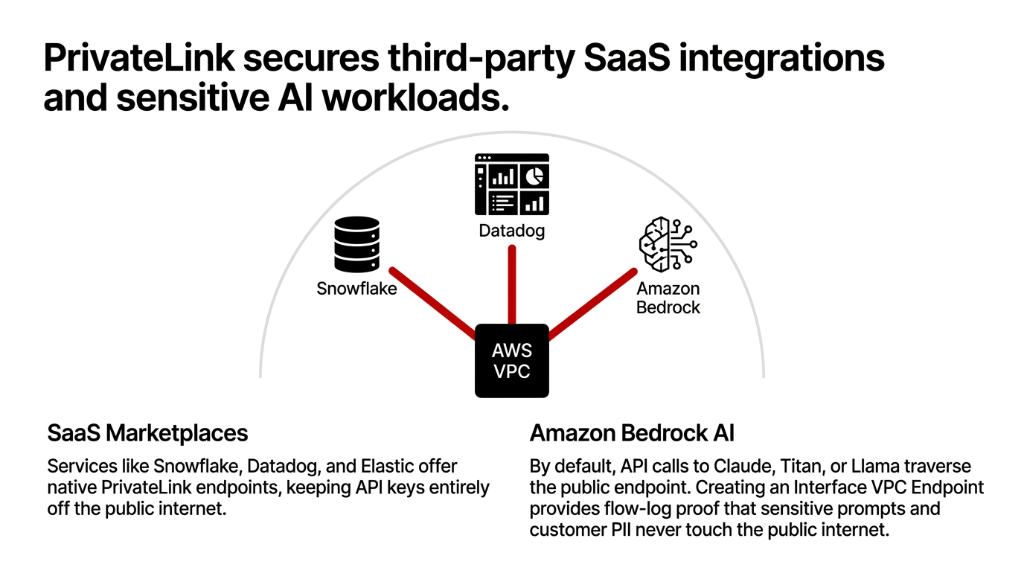
The Multi-VPC Mess Most E-Commerce Teams Are Living In
Let us get specific about the architecture most growing e-commerce brands end up with — not by design, but by accident.
You start with a single VPC. Then your DevOps team isolates the payment processing layer because of PCI-DSS requirements. Then your data team demands their own VPC for the Redshift cluster so analytics queries do not compete with production traffic. Then you spin up a staging environment. Then a shared services VPC for your internal tooling.
Now you have 6 VPCs. And VPC peering. Lots of it.
The Math Problem Nobody Warns You About
VPC peering is non-transitive. If VPC-A peers with VPC-B, and VPC-B peers with VPC-C, VPC-A cannot talk to VPC-C. You need a direct peer between every pair.
With 6 VPCs: up to 15 individual peering connections
With 9 VPCs: up to 34 individual peering connections
We worked with one e-commerce client who had 9 VPCs and 34 active peering connections managed in a Google Sheet. One engineer left the company. Within 3 months, no one knew what half the peers were for.
That is not infrastructure. That is a ticking clock.
Why VPC Peering Fails at Scale — The Part AWS Documentation Glosses Over
Everyone knows VPC peering has the non-transitive limitation. But the problems go deeper.
Route Table Sprawl Is Silent and Deadly
Each peering connection requires route additions on both sides. With 34 connections, you are managing 68+ route table entries across multiple accounts. Miss one update during a deployment and your payment service silently fails to reach your fraud detection service — not with an error, but with a 30-second timeout. Your checkout appears to work. Orders go through. Then chargebacks hit 30 days later because fraud checks were not running.
Cross-Account Connectivity Gets Grotesque
Most e-commerce brands have multiple AWS accounts by the time they hit $2M+ in infrastructure spend — dev, staging, production, security/audit. VPC peering across accounts works, but the IAM permission model and manual route management get out of hand fast past 3 to 4 accounts.
Bandwidth Bottlenecks Are Invisible Until Peak Season
There is no centralized place to monitor aggregate traffic across all peers. During Cyber Monday, one client's analytics pipeline — running in a separate VPC — was consuming 1.4 Gbps from the production VPC. The first sign was a 320ms latency spike on their Shopify checkout API. By the time they traced it back to the culprit VPC, they had lost 2.3 hours of degraded performance.
What AWS Transit Gateway Actually Does (And What It Does Not)
AWS Transit Gateway (TGW) is a regional network transit hub. You attach VPCs and VPN connections to it, and it acts as the central router. Instead of 34 peering connections, you have 9 TGW attachments — one per VPC. Every VPC can reach every other VPC through the hub, and you control routing at the TGW level using route tables.
| Old Model (VPC Peering) | New Model (Transit Gateway) |
|---|---|
| 34 peering connections for 9 VPCs | 9 TGW attachments |
| 68+ route table entries to manage | Central TGW route table |
| No transitive routing | Full transitive routing |
| No traffic monitoring per-peer | TGW Flow Logs per attachment |
| Per-account complexity | Multi-account via RAM sharing |
The Cost Reality AWS Marketing Buries
Transit Gateway is not free. You pay $0.05 per attachment per hour, plus $0.02 per GB of data processed.
18 TB/month internal transfer = ~$367/month in data processing alone
Budget for it before your CFO asks why.
The Security Layer That Most Architects Skip
Here is where 73% of TGW deployments we audit go wrong: they set it up for connectivity and forget about segmentation.
A Transit Gateway connects everything. That is its power. But if you attach your production VPC, your payment VPC, and your staging VPC to the same TGW with a single shared route table — congratulations, your junior developer's misconfigured staging environment can now route directly to your PCI-scope payment systems.
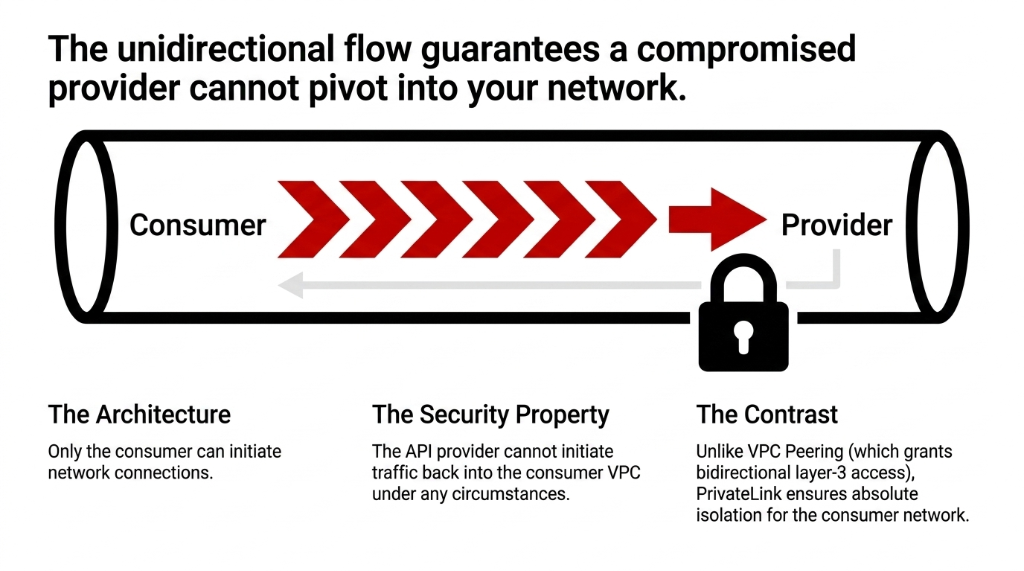
The correct model uses multiple TGW route tables. Here is exactly how we architect it for e-commerce clients:
Route Table 1: Production Workloads
Attach: Frontend VPC, API VPC, Order Management VPC
Allow: Routes between these three only
Block: Any route to Payment VPC except via explicit inspection path
Route Table 2: Payment & PCI Scope
Attach: Payment Processing VPC
Allow: Only inbound from API VPC (one-directional)
Mandatory: All traffic routed through AWS Network Firewall before reaching this VPC
Route Table 3: Data & Analytics
Attach: Data Warehouse VPC (Redshift), ML Pipeline VPC
Allow: Read-only data pull from Order Management VPC
Block: Any write-path back to production
Route Table 4: Non-Production
Attach: Staging VPC, Dev VPC
Complete isolation from Route Tables 1, 2, and 3. No exceptions. Ever.
This segmentation model means a compromised staging environment cannot reach production. Your analytics team cannot accidentally write to the production database. And during a PCI audit, you can prove with TGW Flow Logs exactly which IP talked to which resource on which port — down to the millisecond.
The AWS Network Firewall Integration That Completes the Picture
Transit Gateway routing alone gives you segmentation. But East-West traffic inspection — traffic between your own VPCs — requires AWS Network Firewall or a third-party appliance deployed in an inspection VPC.
Instead of routing traffic directly from VPC-A to VPC-B, you route VPC-A ▸ Inspection VPC (running AWS Network Firewall) ▸ VPC-B. The firewall inspects the payload, applies Suricata-compatible rules, and only passes traffic that matches your allowed patterns.
For e-commerce brands, this matters most in three scenarios:
Lateral Movement Prevention
If an attacker compromises your storefront VPC through an application vulnerability, they cannot pivot to your payment VPC without passing through your firewall rules. The inspection VPC is the choke point.
API Exfiltration Detection
Anomalous data volumes leaving your Redshift VPC at 3 AM trigger a firewall alert before 40 GB of customer PII reaches an attacker's endpoint. Volume-based rules do what security groups cannot.
Compliance Evidence
SOC 2 and PCI-DSS both require network traffic monitoring. TGW Flow Logs plus Network Firewall logs give you the audit trail your compliance team needs — automatically, not from manual exports.
37 Hours Per Quarter ▸ Under 4 Hours
The Client
Singapore-based e-commerce brand doing $11.3M annually. 9 VPCs, 34 peering connections, route tables in a spreadsheet.
Before TGW
DevOps team spent an estimated 37 hours per quarter on route table audits and peering troubleshooting. Reactive, not proactive.
After TGW
Route maintenance dropped to under 4 hours per quarter. Inspection VPC caught 3 internal port-scanning incidents in the first 90 days — all misconfigured Lambda functions probing the payment VPC.
Multi-Region TGW — The Architecture Move for Global E-Commerce
If you are running a global e-commerce operation — US storefront, EU data residency for GDPR, and APAC fulfillment — single-region Transit Gateway is not enough.
AWS Transit Gateway Peering connects TGW instances across regions using the AWS global backbone. Your EU VPC cluster and your US VPC cluster can communicate without touching the public internet, while maintaining separate regional route tables that enforce data residency rules.
The GDPR Data Residency Play
Under GDPR, EU customer PII cannot be processed outside the EU region. With TGW inter-region peering and precise route table control, you can ensure requests from EU users never touch a US-based VPC — even if your application logic inadvertently tries to cross that boundary.
The route simply does not exist. The constraint is architectural, not application-level — which is what auditors want to see.
A practical configuration for a global e-commerce brand:
eu-west-1 TGW: EU storefront + EU payment processor + EU Redshift
us-east-1 TGW: US storefront + fulfillment + shared services
TGW Peering: Only allows product catalog sync (read-only, non-PII) and order routing between regions
All EU PII stays in eu-west-1. Period.
The Implementation Reality: What This Migration Actually Takes
A full VPC peering to Transit Gateway migration for a 6 to 8 VPC e-commerce architecture takes 3 to 5 weeks when done properly. Here is the real breakdown:
Week 1: VPC and Route Table Audit
Document every existing peer, every route, every security group that references a peer CIDR. This is the boring part. Skip it and you will break something in production.
Week 2: Deploy TGW in Parallel
Attach VPCs one at a time, starting with non-production. Do NOT decommission peering connections yet. Run both in parallel to verify connectivity before cutting over.
Week 3: Migrate Production VPCs
This requires a maintenance window of approximately 15 to 20 minutes per VPC cutover. Plan for it. Brief your Shopify or storefront team so they are on standby.
Week 4: Deploy Inspection VPC and AWS Network Firewall
Tune the Suricata rules to your traffic baselines — this cannot be done in a day. Give it a full week of monitoring before setting rules to Block mode.
Week 5: Decommission and Monitor
Decommission old peering connections. Enable TGW Flow Logs to CloudWatch. Set up CloudWatch alarms for attachment bandwidth thresholds.
The Cost Reality — Stop Making Excuses
Here is the number that ends every budget objection we encounter:
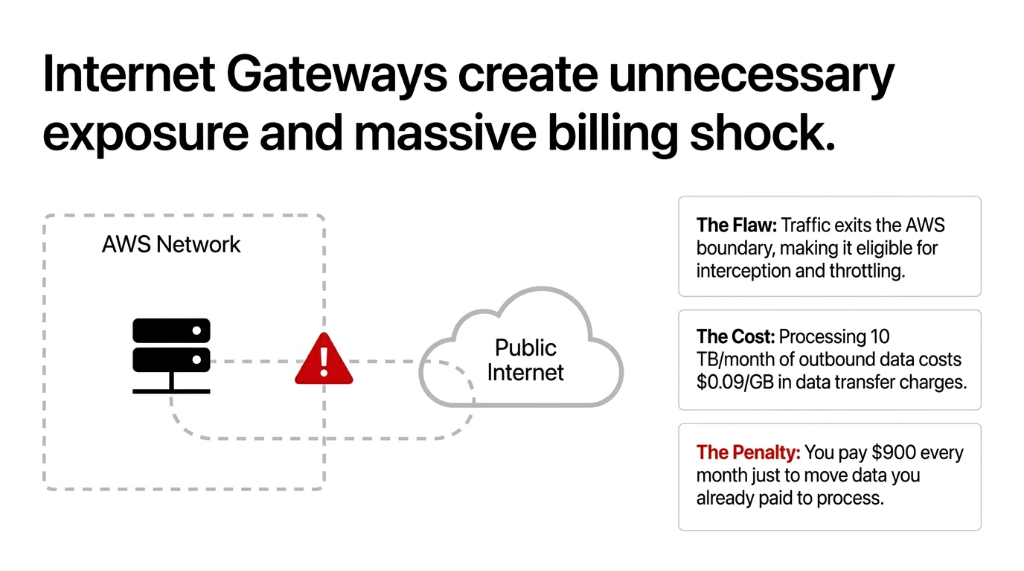
TGW Cost vs. The Alternatives
TGW Monthly Cost
6 to 8 VPCs at typical e-commerce volumes: $800 to $1,400/month ($9,600 to $16,800/year)
1-Hour Outage Cost
E-commerce brands over $2M/year lose approximately $83,000/hour in abandoned carts during peak downtime.
PCI Breach Fine
Starts at $5,000/month. Goes to $100,000/month for repeat violations. One misconfigured staging route to your payment VPC is all it takes.
For any brand doing over $2M in online revenue, that is a rounding error against the cost of a 2-hour outage or a PCI breach fine.
Transit Gateway is not a luxury for enterprises. It is the minimum viable cloud security architecture for any e-commerce brand with PCI-scope infrastructure, multi-team ownership, or global operations.
Stop Running Your E-Commerce Infrastructure Like It Is 2019
VPC peering made sense when you had 2 VPCs and one engineer who understood the routes.
The moment you crossed 4 VPCs, 2 AWS accounts, or hired your third DevOps engineer, the complexity stopped being manageable by humans.
At Braincuber Technologies, we have migrated e-commerce cloud architectures on AWS for clients in the US, UK, UAE, Singapore, and India. We know exactly where the bodies are buried in multi-VPC peering setups — and we know how to get you out without a production outage.
For brands already running AI workloads on AWS, the TGW + Network Firewall combination is the foundation that makes Bedrock access, SageMaker inference VPCs, and private AI pipeline routing compliant and auditable from day one.
Frequently Asked Questions
Does AWS Transit Gateway support cross-account VPC connectivity?
Yes. Using AWS Resource Access Manager (RAM), you share a Transit Gateway across multiple AWS accounts within the same AWS Organization. Each account attaches its VPCs to the shared TGW. This eliminates cross-account VPC peering, which requires individual IAM trust policies and becomes unmanageable past 3 to 4 accounts.
How much does AWS Transit Gateway cost for a mid-size e-commerce platform?
Pricing is $0.05 per TGW attachment per hour plus $0.02 per GB of data processed. A typical e-commerce platform with 6 VPC attachments and 15TB/month internal traffic pays roughly $720 to $950/month. Multi-region TGW peering adds attachment fees for each connected region's TGW instance.
Is AWS Transit Gateway required for PCI-DSS compliance?
Not required, but it significantly simplifies compliance. PCI-DSS Requirement 1 mandates network segmentation between cardholder data environments and other systems. TGW's multiple route tables plus AWS Network Firewall integration provide the documented, auditable segmentation controls that a peering-based architecture struggles to demonstrate cleanly during a QSA audit.
Can AWS Transit Gateway replace AWS Direct Connect or VPN connections?
TGW works alongside Direct Connect and VPN — it does not replace them. You attach your Direct Connect Gateway or VPN connection to the TGW, giving all attached VPCs access to your on-premises network through a single connection. This is especially useful for e-commerce brands with on-premises ERP systems like Odoo or SAP that need to communicate with cloud-based order management VPCs.
What is the difference between TGW route tables and VPC route tables?
VPC route tables control traffic leaving individual subnets within a VPC. TGW route tables control which attachments can route traffic to each other at the Transit Gateway level. You need both — TGW route tables enforce macro-level segmentation between VPCs, while VPC route tables and security groups enforce micro-level control within a VPC. Skipping TGW route table segmentation is the single most common architecture mistake we see.
Ready to Stop Managing 30+ Route Table Entries by Hand?
Book a free 15-Minute Cloud Architecture Audit with Braincuber Technologies. We will identify your biggest routing and security gap on the first call — no pitch, just findings. We have migrated multi-VPC architectures for clients in the US, UK, UAE, Singapore, and India.
Free audit. Routing risks identified. Migration path mapped on the first call.