
Most US shopify retailers are leaving somewhere between 18% and 31% of their average order value sitting unearned — not because their products are bad, but because the recommendation engine running their shopify online store is showing the wrong items to the right people at the wrong moment.
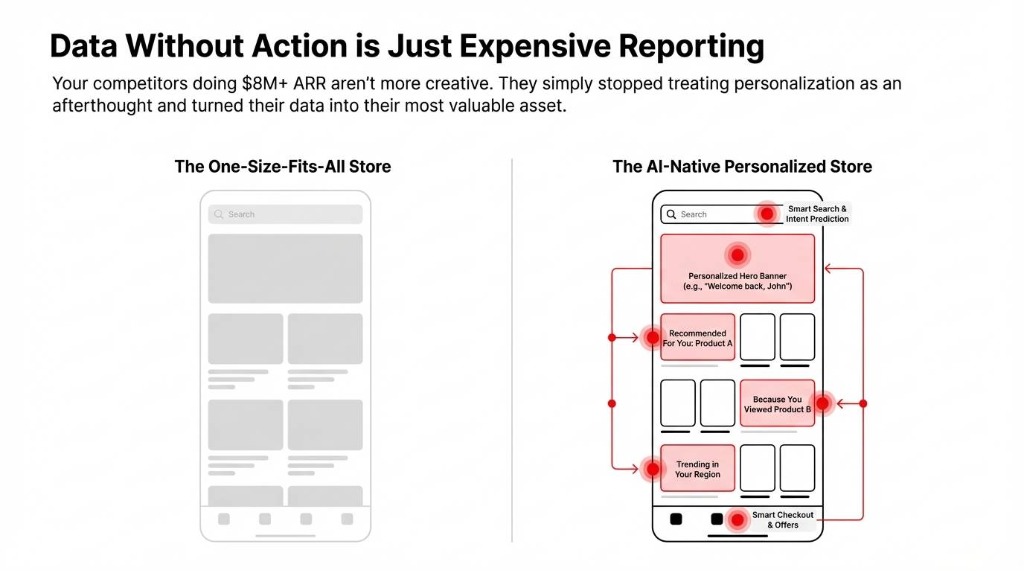
We've audited over 60 shopify ecommerce stores across the US in the past two years. The pattern is the same every single time. The merchant who decided to build shopify store installed whatever default tool came with their theme, never opened the shopify analytics dashboard to check click-through rates on recommendation widgets, and has been quietly burning AOV potential every day since. (And yes — they're usually shocked when we show them the math.)
Here is the ugly truth: choosing the wrong recommendation approach for your Shopify store is not a minor inconvenience — it's a $14,000–$47,000 annual revenue gap depending on your traffic and catalog size.
This post tells you exactly what each option does, what it costs, and who should be using it.
Shopify's Built-in Recommendations: What You Actually Get
When you create shopify store and set up your shopify storefront, you get access to the Search & Discovery app. It's free. It's also frustratingly limited.
The Data Blindspot
Hidden flaw: Static Logic
The Shopify API feeding this tool runs on static product data tagging, not dynamic real-time session behavior.
We show US business shopify owners this one fact and they go quiet: Shopify's built-in recommendations require a minimum of 50–100 orders before the algorithm finds any meaningful patterns. If your shopify online shopping storefront has fewer than 200 orders, the suggestions are essentially random — dressed up in nice widget clothes.
The analytics on your shopify dashboard won't even tell you the click-through rate per widget unless you layer Google Analytics 4 on top. That's a whole second project.
Built-in is fine if: you're testing the concept of recommendations, you're brand-new to ecommerce business, or your catalog has fewer than 40 SKUs. Otherwise, you're running a $200K/year operation using a tool designed for a $20K/year store.
The other problem? When you're looking to setup a shopify store with serious B2B or shopify b2b use cases, the built-in recommendation layer has zero segmentation. A wholesale buyer from Chicago sees the same suggestions as a retail customer from Austin. That's not personalization — that's noise.
Third-Party Apps from the Shopify App Marketplace: The Real Price of "Easy"
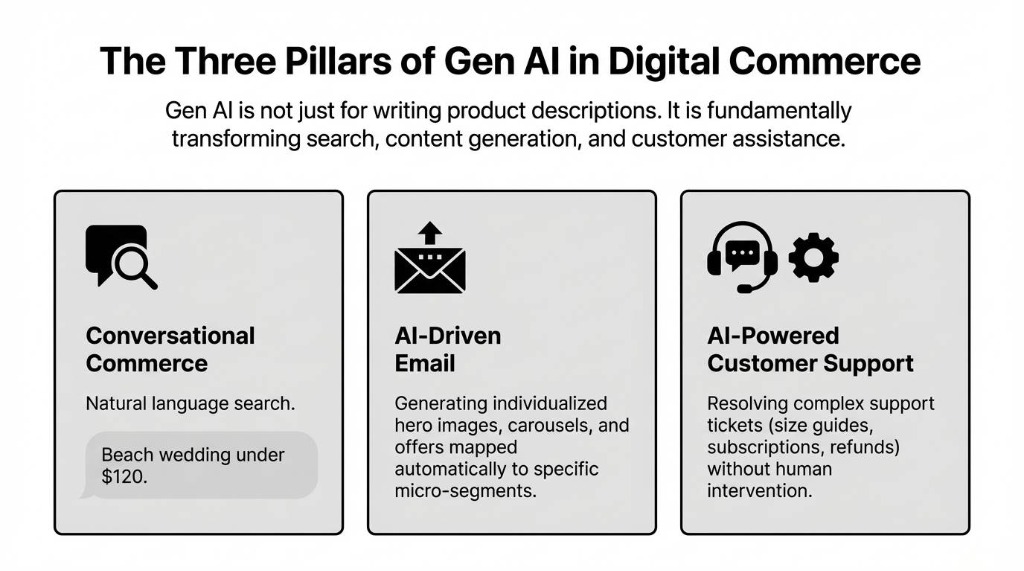
The shopify app marketplace (also called the shopify app market) has hundreds of recommendation and personalization apps on shopify. The top ones — Rebuy, LimeSpot, Nosto, Algolia — are genuinely powerful. But most shopify retailers dramatically underestimate what they actually cost at scale.
| App Vendor | Starting Price | Scaling / Enterprise Price |
|---|---|---|
| Rebuy | $99/month | $749/month+ |
| LimeSpot | $18/month | $600/month+ |
| Nosto | $99/month | $499/month+ |
| Searchspring | $699/month | Custom Enterprise |
A $249/month shopify subscription to Rebuy is $2,988 per year. That's fine if you're doing $500K+ in shopify store sales. It's catastrophic if you're doing $120K and only using 30% of the app's features.
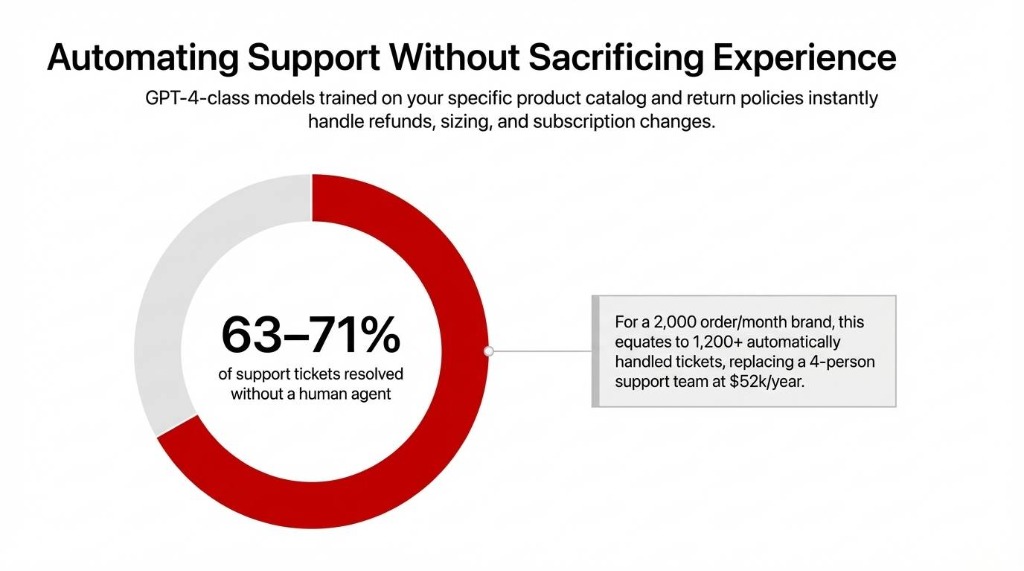
We've watched clients use marketplace apps on their Shopify store for 14 months without ever activating the behavioral segmentation layer — paying $249/month for what they could have gotten from a $29/month shopify plugin. (Your shopify customer support rep won't tell you this either.)
The other hidden issue with ecommerce apps from the app store: the api shopify limits. During Black Friday, when your store hits 3,000 orders in an hour, third-party apps start queuing requests. Your recommendations lag. Your conversions tank. We saw this exact scenario cost one US shopify online shop approximately $8,300 in a single 4-hour window.
Custom AI Recommendation Engines: Who Actually Needs This
Here's the controversial opinion that every shopify development company should tell you but rarely does: most Shopify stores do not need custom AI. But the ones that do are hemorrhaging money every month they delay building it.
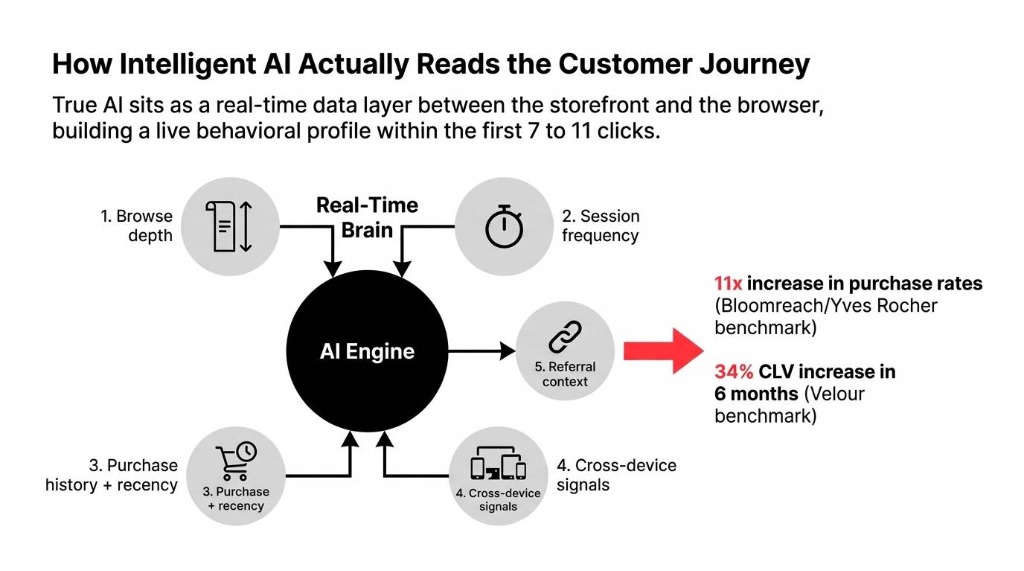
A custom AI recommendation engine built for your shopify ecommerce store uses your full order history, Klaviyo behavioral data, and site analytics — not just Shopify's purchase data. That means the model is trained on your customers' actual decision patterns.
The results are measurable and oddly specific: a custom AI recommendation engine increases AOV by 10–30% for SMB ecommerce stores, with positive ROI within 6 months for stores processing over 1,000 monthly orders.
The True OpEx Advantage
A working custom recommendation engine can be live in 4–6 weeks and runs for approximately $40/month in cloud hosting after a one-time development investment. Compare that to $75–$499/month recurring for a third-party shopify subscription apps.
Custom AI also integrates cleanly with your shopify inventory management layer. When stock drops below a threshold in your inventory management software shopify uses (Cin7, Skubana, or Odoo), you can instruct the engine to stop serving that SKU instantly. None of the off-the-shelf apps do this cleanly.
What Proper Shopify Recommendation Setup Actually Looks Like
Proper setup has four non-negotiable steps to succeed in the shopify market:
- ▸ First: placement strategy. Recommendations belong on product pages, collection pages, the cart drawer, checkout, and the post-purchase thank-you page.
- ▸ Second: widget sizing. Three to four products per widget max. Showing 8–10 triggers decision paralysis — shoppers see too many options and pick none.
- ▸ Third: measurement. Track Add-to-cart rate from recommendation clicks and the AOV delta. If your shopify analytics aren't tracking this, you are guessing.
- ▸ Fourth: data freshness. A shopify inventory tracking integration that auto-removes out-of-stock SKUs from the recommendation pool is baseline, not optional.
Frequently Asked Questions
Does Shopify's free built-in recommendation tool actually work?
It works for stores under 50 monthly orders and catalogs under 40 SKUs. Beyond that, it lacks behavioral tracking and real analytics. You need either a third-party app or a custom build.
How much do third-party Shopify recommendation apps cost?
LimeSpot starts at $18/month; Rebuy scales to $749/month at 7,500 orders. Nosto runs $99–$499/month. Most US Shopify retailers overpay because they pay for features they never configure.
When does a custom AI recommendation engine make sense for Shopify?
Once you're processing 1,000+ monthly orders, custom AI generates positive ROI within 6 months. It increases AOV by 10–30% by training on your full customer history — not generic benchmarks.
Will a third-party recommendation app slow down my Shopify store?
Yes, especially during high-traffic events. Apps making real-time API calls hit rate limits, causing widgets to lag. Custom engines using cached responses or edge-deployed models avoid this.
How long does it take to set up a proper recommendation engine?
A third-party app takes 2–5 days to configure properly. A custom AI engine built by a qualified Shopify development company takes 4–6 weeks from discovery to production deployment.
You Are Hemorrhaging AOV Right Now
Every month you run generic suggestions is a month of conversion data you're not capturing to train a future model.
Book Your Free 15-Minute Shopify Revenue Audit
We'll find your biggest recommendation revenue leak in the first call and show you the exact math on what a custom engine will yield.