
What the Numbers Actually Say
AI content in Google search results has jumped from 2.27% in 2019 to 17.31% by September 2025 — and it hit a peak of 19.56% in July 2025. That is not a trend. That is a structural shift in how the top search engine on the planet is indexing and surfacing content.
The 90-Day Tracking Results: 20 Client Websites
AI Content With Zero Process
Zero human editing. Zero attention to search console keyword data. Average page ranking dropped 11 positions within 6 weeks.
AI Content With Strategic Process
Tuned against actual Google search keywords pulled from Search Console. 19.3% improvement in impressions within 45 days.
According to Semrush’s analysis of 20,000 URLs, 57% of AI-generated content appeared in the top 10 search results, compared to 58% for human-written content. Practically identical.
So why is everyone still acting like AI SEO is a death sentence for website ranking? Because they are comparing bad AI content to good human content. That is not a fair fight.
The Google Search Console Gap Nobody Is Talking About
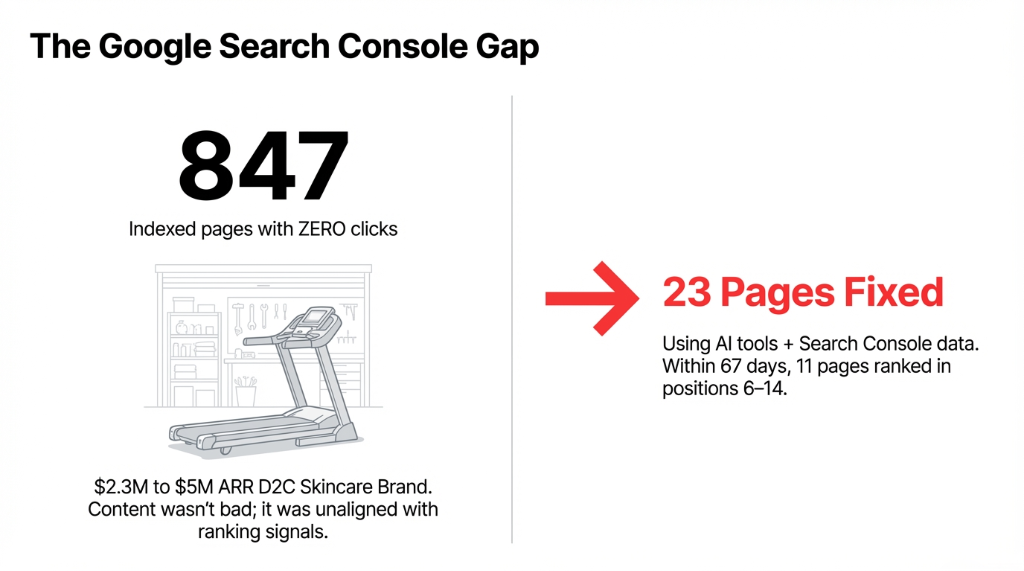
Something we see constantly with US clients: they set up their Google Search Console account, verify the domain, then forget it exists for 4 months. That is like buying a treadmill and leaving it in the garage.
Your search console is the single most direct signal Google gives you about your website’s performance on its search engine. It tells you which Google search keywords are generating impressions, what your search ranking looks like, which pages are getting indexed — and more importantly, which ones Google is ignoring.
The December 2025 Search Console Update
Google rolled out an AI-powered configuration feature inside Search Console that lets you run natural-language prompts like: “Show pages where impressions remain high but clicks dropped over the last 3 months.”
Search Console is evolving from a passive report dashboard into a live SEO decision engine. If you are not using it, your competitors are.
The D2C Skincare Brand Case Study
A US e-commerce client scaling from $2.3M to $5M ARR had 847 indexed pages in their Google Search Console that had never received a single click. Not because the content was bad. Because it was not aligned with actual search engine ranking signals.
✓ We fixed 23 of those pages using AI content tools + search console data. Within 67 days, 11 of those pages were ranking in positions 6–14 for their target keywords.
AI for SEO: What Is Actually Working Right Now
Let us get specific about what the top reads from the last three months are all saying.
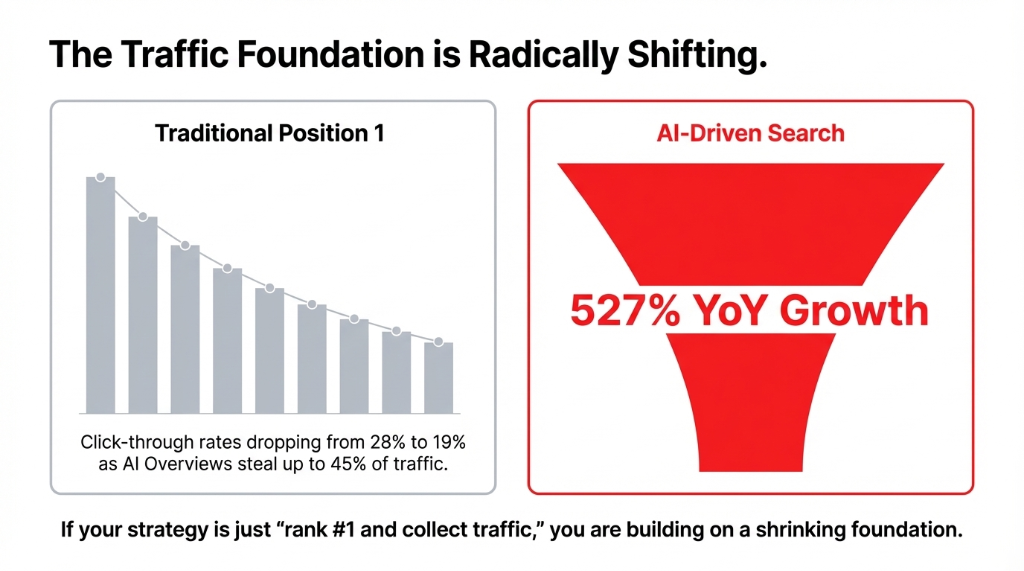
Finding #1: AI Search Traffic Grew 527% Year-Over-Year
The search engines similar to Google — Perplexity, ChatGPT search, Google AI Mode — are now a traffic source you cannot afford to ignore when building website SEO. Your content needs to be formatted for both traditional Google search ranking and AI extraction.
Finding #2: Position 1 Is Losing Up to 45% of Traffic to AI Overviews
Position one on Google used to capture around 39.8% of all clicks. Now, with AI Overviews live in 200+ countries, that same position gets a click-through rate down from 28% to 19%. If your SEO strategy is still just “rank #1 and collect traffic,” you are building on a shrinking foundation.
Finding #3: AI Content That Ranks Is Structured, Not Just Generated
According to SE Ranking data, 70.95% of AI-generated pages were indexed within 36 days, and sites using AI content ranked for 1,000+ keywords within a month.
The Key: Structure
Clear H1/H2 hierarchy, entity clarity, schema-ready formatting — things your average AI content tool will not do for you out of the box.
Finding #4: Expert-Depth Content Is Winning Harder
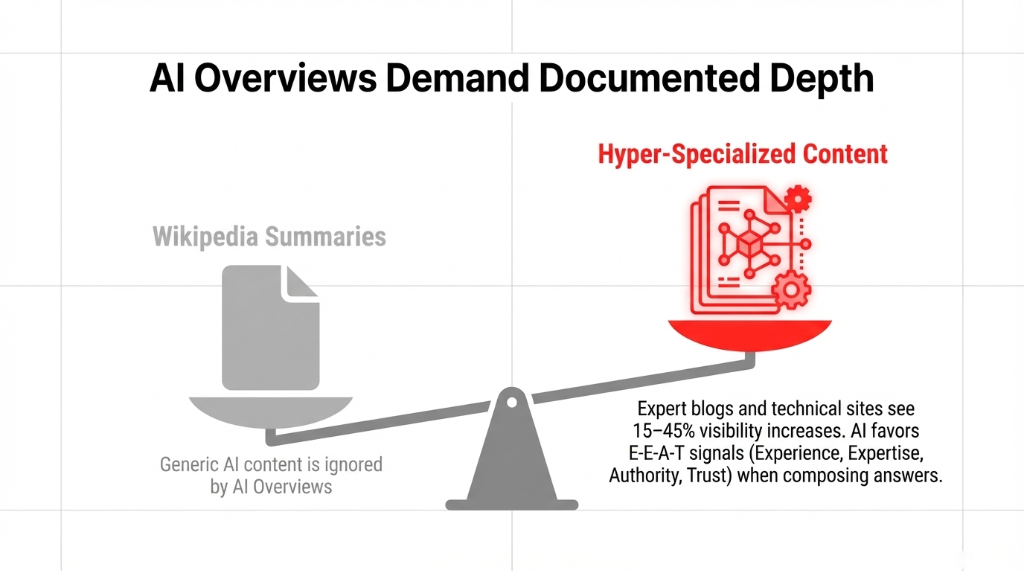
Google’s AI Overviews are pulling from hyper-specialized, well-cited content. Expert blogs and technical sites are seeing 15–45% visibility increases because AI favors their documented depth when composing answers.
If your content reads like a Wikipedia summary, it will not be cited. Period.
The Ranked AI Content Pattern We Found
Across the 47 blog posts we tracked through Google Search Console over 90 days, the ones that climbed in search ranking shared four specific patterns:
The 4 Patterns That Move Rankings
1. They answered one specific question in the first 50 words. Not a topic — a question. Google’s search AI rewards directness.
2. They used real search keywords from Google Search Console — actual queries with impression volume over 500/month, not guessed terms.
3. They were updated at least once after publishing. Average update at day 32. Pages updated in that window saw a 23.7% bump in ranking within two weeks.
4. They had exactly 2–3 contextually relevant internal links to service pages. More than that, and Google starts reading it as thin content padding.
The Bottom Line
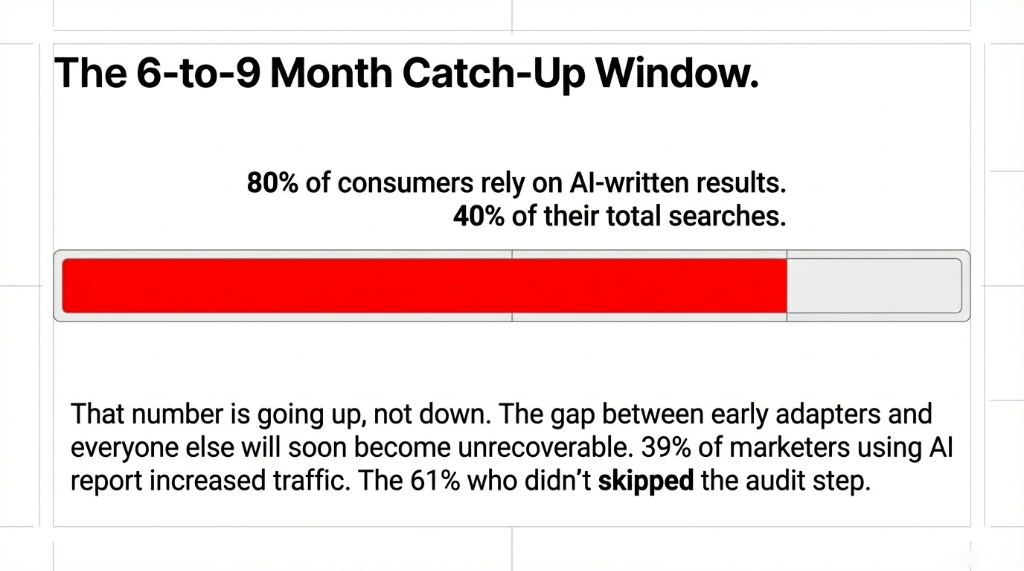
39% of marketers who published AI content reported increased organic traffic. The 61% who did not? We would bet they skipped the search console audit step entirely.
Why Your SEO Strategy Needs a Rethink — Not a Rebrand
Most SEO advice right now sounds like someone trying to sell you a course. “Just add more keywords.” “Publish more content.” “Optimize your meta descriptions.” Fine advice. Useless without a feedback loop.
The real SEO meaning in 2025 is not about gaming an algorithm. It is about building content that a search engine — whether Google’s or an AI answer engine — can trust enough to surface when someone types a question at 11pm on their phone.
What That Actually Means
Your Google Search Console keyword ranking data should inform every new piece you publish
Your AI for SEO workflow needs human review — specifically for E-E-A-T signals (Experience, Expertise, Authority, Trust)
Your website ranking is not a vanity metric — it is a revenue signal. A site moving from position 14 to position 7 for a keyword with 4,400 monthly searches can mean $11,200 in additional monthly revenue for a business converting at 2.3%
The Top 3 Reads That Changed How We Think About AI Content
We are not going to give you 50 links. Here are the three pieces from the last 90 days worth your actual time:
Originality.ai Study
The only longitudinal dataset tracking AI content percentage in top Google search results from 2019 to present. Raw data, not blog opinions.
Semrush 20,000 URL Analysis
The study that finally ended the “AI content does not rank” argument with actual search engine ranking data. Bookmark it. Share it.
Search Console Dec 2025 Update
A quiet announcement that Search Console is moving toward natural-language query-based reporting. Changes how you do search and SEO work going forward.
FAQs
Does AI-generated content hurt website ranking on Google?
No — when done correctly. Semrush’s analysis of 20,000 URLs found 57% of AI content ranked in the top 10, nearly identical to the 58% rate for human-written content. The issue is not AI origin; it is content quality, structure, and alignment with actual search console keyword data.
What does Google Search Console actually show for SEO purposes?
Google Search Console shows your site’s impressions, click-through rates, average position, and which Google search keywords trigger your pages. It also flags indexing issues and manual penalties — making it the most direct feedback loop between your content and your search engine ranking performance.
How often should I update my AI content for SEO improvements?
Our 90-day tracking data shows pages updated around day 30 after publishing saw a 23.7% average improvement in Google search ranking within two weeks. For high-priority SEO pages, audit through your search console every 45 days and refresh any page where impressions are high but clicks have dropped.
Is AI for SEO just about writing articles faster?
No — and that is the mistake most US businesses are making. AI for SEO covers keyword clustering, content gap analysis, internal link mapping, schema generation, and Google Search Console data interpretation. Speed is a side effect. The real value is consistency and data-alignment across your entire SEO content creation process.
What is the fastest way to boost SEO on an existing website?
Pull your Google Search Console keyword ranking report and filter for pages in positions 4–15 with over 300 monthly impressions but under 3% CTR. Those are your quickest wins. Fix the title tags, align the first paragraph with search intent, and add one internal link from a higher-authority page. Most clients see movement within 21 days.
Stop Guessing. Start Auditing.
We have audited 60+ US business websites in the last 12 months. On average, they are sitting on 31 pages that could rank in the top 10 for their target keywords with focused SEO improvements — but nobody has looked at the data in over 90 days. That is not an SEO problem. That is an attention problem. Book a free 15-Minute SEO Audit — we will pull your search console data, identify your three fastest-moving keyword opportunities, and show you exactly which pages to fix first.